

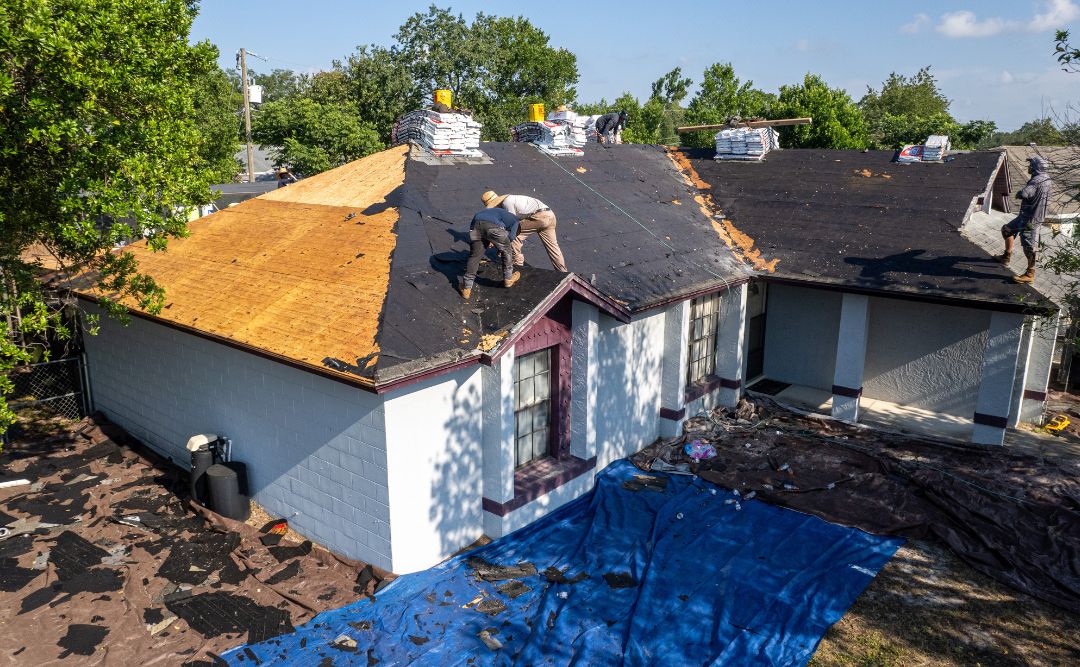
A bad storm can leave you staring up at a compromised roof and wondering what to do next. This article walks Central Florida homeowners through the first steps after a storm damage roof repair situation, from documenting the scene to calling for emergency roof tarping, starting a roof insurance claim, and getting the right contractor on site fast. Getting this right from the start protects your home and your wallet.
If you live in the Orlando metro, Sanford, or anywhere in between, you already know what late-summer storm season looks like. One afternoon the skies open up, and by evening you have a mess on your hands. Here is what to do when that happens.
Table of Contents
Start With Safety, Then Document Everything
Before you climb on anything or even step into your attic, take a walk around the perimeter of your house. Look for downed power lines, fallen trees leaning against the structure, and visible punctures or missing sections. Central Florida storms can deposit debris in places you would not expect, and a roof that looks okay from the front can have serious damage on the back slope.
Once you are confident it is safe to move around, pull out your phone and start photographing. Capture every angle. Missing shingles, bent flashing, clogged gutters packed with granules, and any water stains on your ceilings or walls are all part of your storm damage roof repair documentation. Insurance adjusters will ask for proof, and the more thorough you are, the smoother the storm damage roof repair claim process goes.
Your Storm Damage Roof Repair Checklist
This is the order of operations most experienced contractors recommend after a Central Florida wind event:
- Stay off the roof until a licensed roofer has assessed the structure
- Document all visible damage inside and outside with photos and short video clips
- Call a licensed local contractor for wind damage roof repair as soon as it is safe to do so
- Ask specifically about emergency roof tarping if you have open sections or active leaks
- Notify your insurance carrier and start the roof insurance claim process within 48 hours
- Avoid signing any contractor's agreement until you have reviewed your policy and confirmed licensing
- Keep all receipts for temporary repairs and materials, as these are usually reimbursable
Why Emergency Roof Tarping Buys You Time
If a storm has blown off shingles or created an opening in your deck, emergency roof tarping is not optional. Water moves fast. In Florida’s humidity, it only takes a day or two for moisture intrusion to start feeding mold growth inside your walls and attic insulation. A properly installed tarp covers the damaged area, is weighted and fastened down the sides of the roof, and holds until a permanent repair can be scheduled.
This is not a DIY project. Working on a wet roof after a storm is one of the leading causes of fall injuries among homeowners. A contractor handling storm damage roof repair will have the equipment, footing, and experience to do this safely. If you need help fast, look for a storm restoration roofing company in your area that offers 24-hour emergency response.

What a Good Temporary Tarp Installation Looks Like
A quality emergency tarp job covers at least three feet beyond the damaged zone on every side. It is secured with lumber or strapping rather than just staples or tape. If a roofer shows up and wants to slap a small square of plastic on the exact spot, that is a red flag. Proper tarping accounts for wind uplift, which is a real concern in Central Florida where storms come back to back during hurricane season.
Storm Damage Roof Repair: Quick Reference TimelineActionTimeframeWhy It Matters
Action | Timeframe | Why It Matters |
Do a visual safety check | Immediately after storm | Spot hazards before going near the roof |
Photograph all damage | Within 24 hours | Insurance claim documentation |
Call a licensed roofer | Within 24-48 hours | Prevent water intrusion and mold |
Request emergency tarping | Same day if needed | Temporary protection until repairs |
File your insurance claim | Within 48-72 hours | Most Florida policies require prompt notice |

How to Handle the Roof Insurance Claim Process
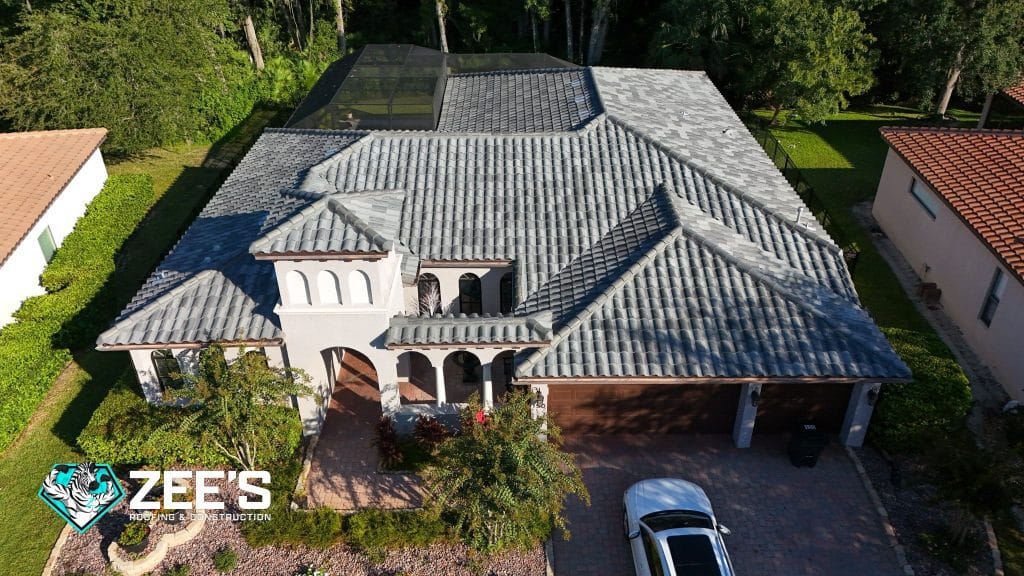
Central Florida roofing is not the same as roofing anywhere else in the country. High humidity, intense UV, tropical storm exposure, and coastal salt air all accelerate shingle wear. For Orlando homeowners, the roof repair vs replacement calculation almost always tips toward replacement sooner than it would in a cooler, drier climate. When we do roof replacement in Orlando, we often recommend impact-resistant shingles or metal roofing rated for Florida wind loads. The higher upfront cost outlasts standard asphalt by years, which shifts the long-term roof repair cost math significantly.
Make the Right Call Before It Costs You More
Florida’s weather is well documented. The National Weather Service and FEMA track every significant storm event, which can actually help your claim if you have a specific date and event to reference.
When you call your insurer, be specific. Tell them when the storm hit, what type of damage you observed, and whether you have taken any temporary measures. Most Florida homeowner policies require prompt notification, and delays can give an adjuster grounds to question whether your storm damage roof repair claim is weather-related or the result of deferred maintenance. If you are not sure how the process works, read up on how to get insurance to pay for your roof replacement in Florida before you file a storm damage roof repair claim.
One thing many homeowners do not realize: you can and should have your contractor present during the adjuster’s inspection. A good storm restoration roofing contractor knows what adjusters are looking for and can point to damage that might otherwise get missed.
Repair or Replace? What Storm Damage Roof Repair Actually Means
Not every storm event means a full replacement. Isolated shingle loss, minor flashing damage, or a small puncture can often be handled with a targeted storm damage roof repair. However, if your roof is already aging, has pre-existing granule loss, or took a significant hit across a large section, a replacement may actually be the smarter financial call, especially if you are filing a roof insurance claim anyway.
To understand the difference and figure out which direction makes more sense for your home, take a look at this breakdown of roof repair vs. replacement. It covers the key factors a contractor will assess and what your insurer typically considers.
Central Florida Roofing Conditions You Need to Know
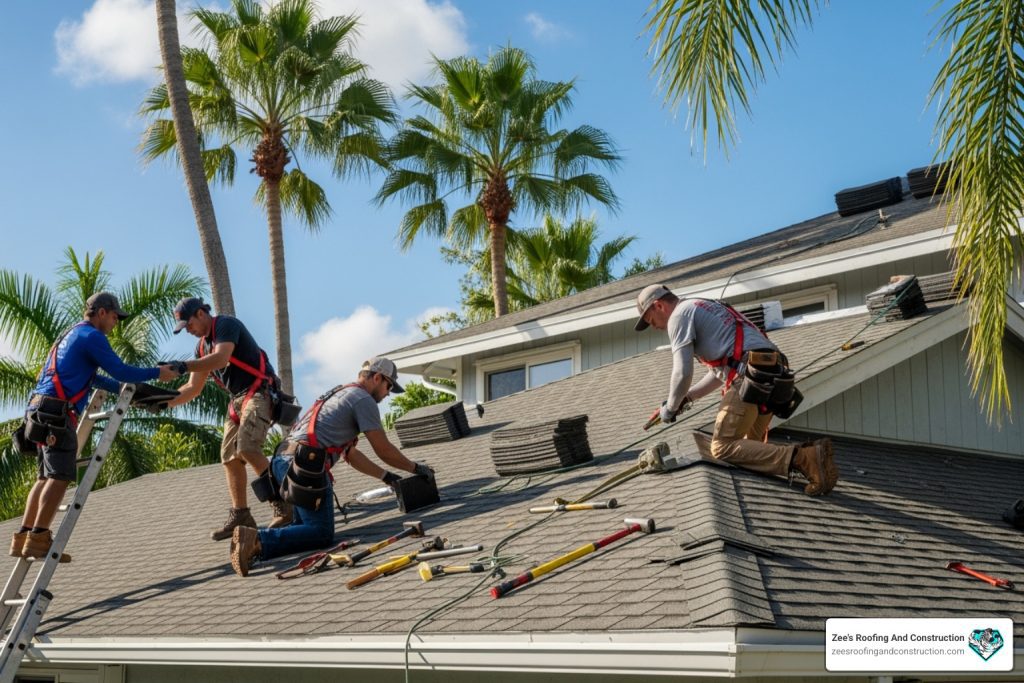
Orlando and the surrounding area sit in one of the most storm-active corridors in the country. The National Weather Service tracks weather patterns that regularly bring tropical systems, afternoon thunderstorms with 60-plus mph gusts, and hail through Central Florida from June through November.
Most homes here are built with asphalt shingles rated for high-wind resistance, but age, sun exposure, and repeated wind events degrade that protection over time. Florida building codes also require specific fastening patterns and impact ratings in certain zones, which affects what qualifies as a code-compliant storm damage roof repair. If your roof was installed more than 15 years ago, there is a real chance it is not up to current code, and a full replacement may bring you into compliance while also addressing the damage.
If you experienced hurricane-level wind speeds in your neighborhood, check out what local contractors see most often after a major event in our article on hurricane roof damage in Orlando.
Get Your Storm Damage Roof Repair Started the Right Way
The steps you take in the first 24 to 48 hours after a storm hit matter. Document the damage thoroughly, call a licensed contractor for emergency roof tarping if you have any open areas, and get your roof insurance claim started before the deadline window closes. Central Florida’s storm season does not give you much of a buffer, and skipping prompt storm damage roof repair going into the next weather event is a decision that will cost you far more down the line.
Zee’s Roofing and Construction serves the Orlando, Sanford, and Central Florida area with storm damage roof repair, insurance claim support, and emergency response. Call us or reach out online to schedule a free storm inspection.
Frequently Asked Questions
How soon should I call for storm damage roof repair after a storm?
Contact a licensed roofer within 24 to 48 hours of the storm. The sooner you get a storm damage roof repair inspection on the calendar, the sooner you can stop water from moving deeper into your home. Florida’s humidity makes moisture damage happen fast, and most insurance policies require prompt notification.
Is emergency roof tarping covered by my insurance?
In most cases, yes. Emergency roof tarping is considered a reasonable mitigation measure, and the cost is typically reimbursable through your roof insurance claim. Keep all receipts and photographs of the installation so your adjuster has documentation.
What is the difference between wind damage roof repair and storm restoration roofing?
Wind damage roof repair usually refers to isolated fixes after a single event, while storm restoration roofing is a broader term covering full assessments, insurance coordination, and complete rebuilds when damage is extensive. A licensed contractor can assess which applies to your situation after a proper inspection.
Can I do my own storm damage roof repair to save money?
Minor interior cleanup and temporary measures like moving furniture away from leaks are fine. Actual roof work is not. DIY storm damage roof repair on a wet or compromised roof is dangerous, can void your insurance claim, and may not meet Florida building code requirements. Always use a licensed contractor for any roofing work.
Does my insurance cover storm damage roof repair in Florida?
Florida homeowner policies generally cover sudden and accidental storm damage. Coverage depends on your specific policy, the age of your roof, and whether the damage is classified as wear and tear versus storm-related. A storm restoration roofing contractor who works with insurance carriers regularly can help you document the claim correctly.