

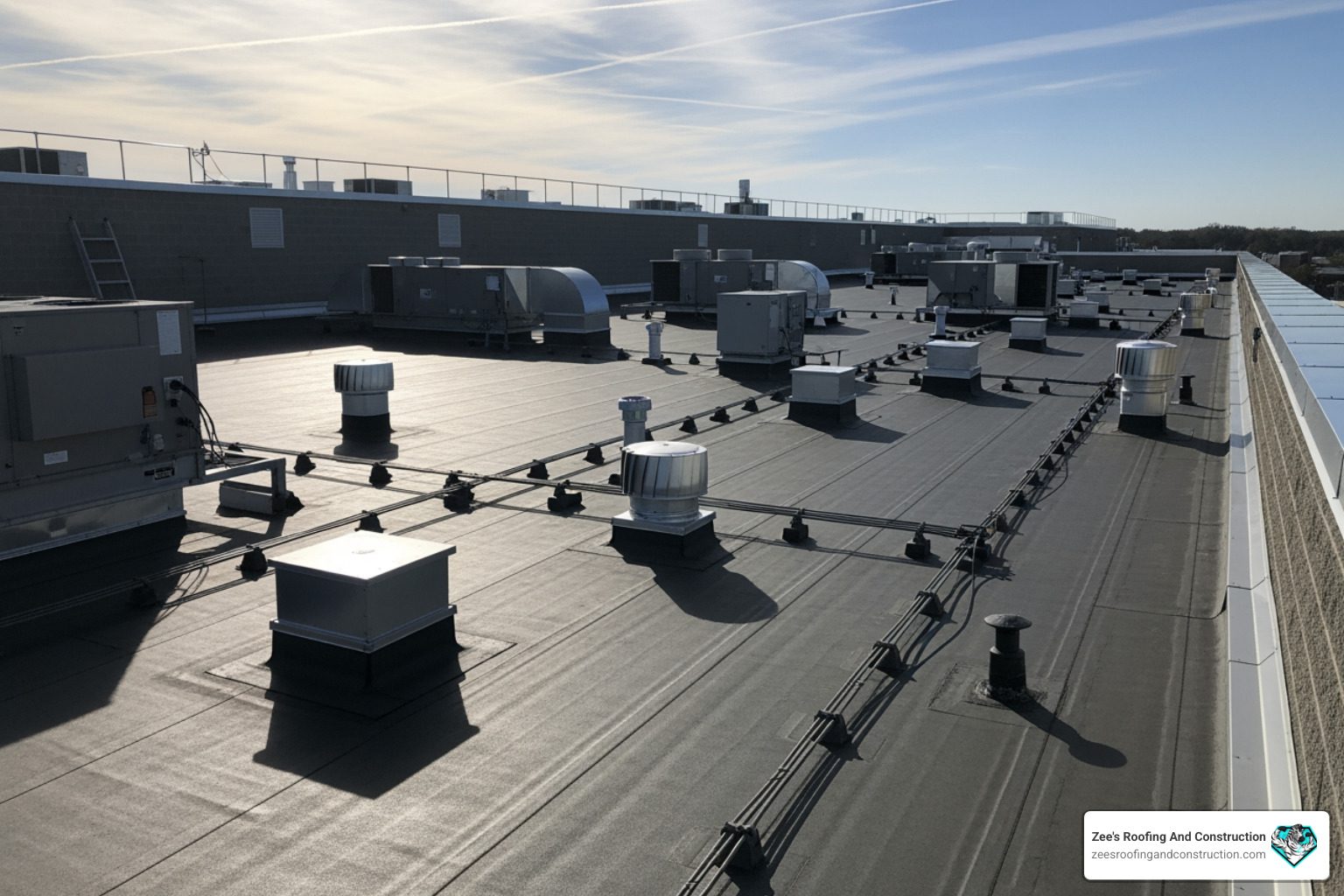
Understanding Your Commercial Roofing Options in Central Florida
When you’re weighing tpo vs pvc roofing for your Central Florida property, you’re choosing between two of the most popular single-ply membrane systems on the market. Both offer excellent protection for flat and low-slope roofs, but they have distinct differences that matter for your budget, building type, and long-term performance.
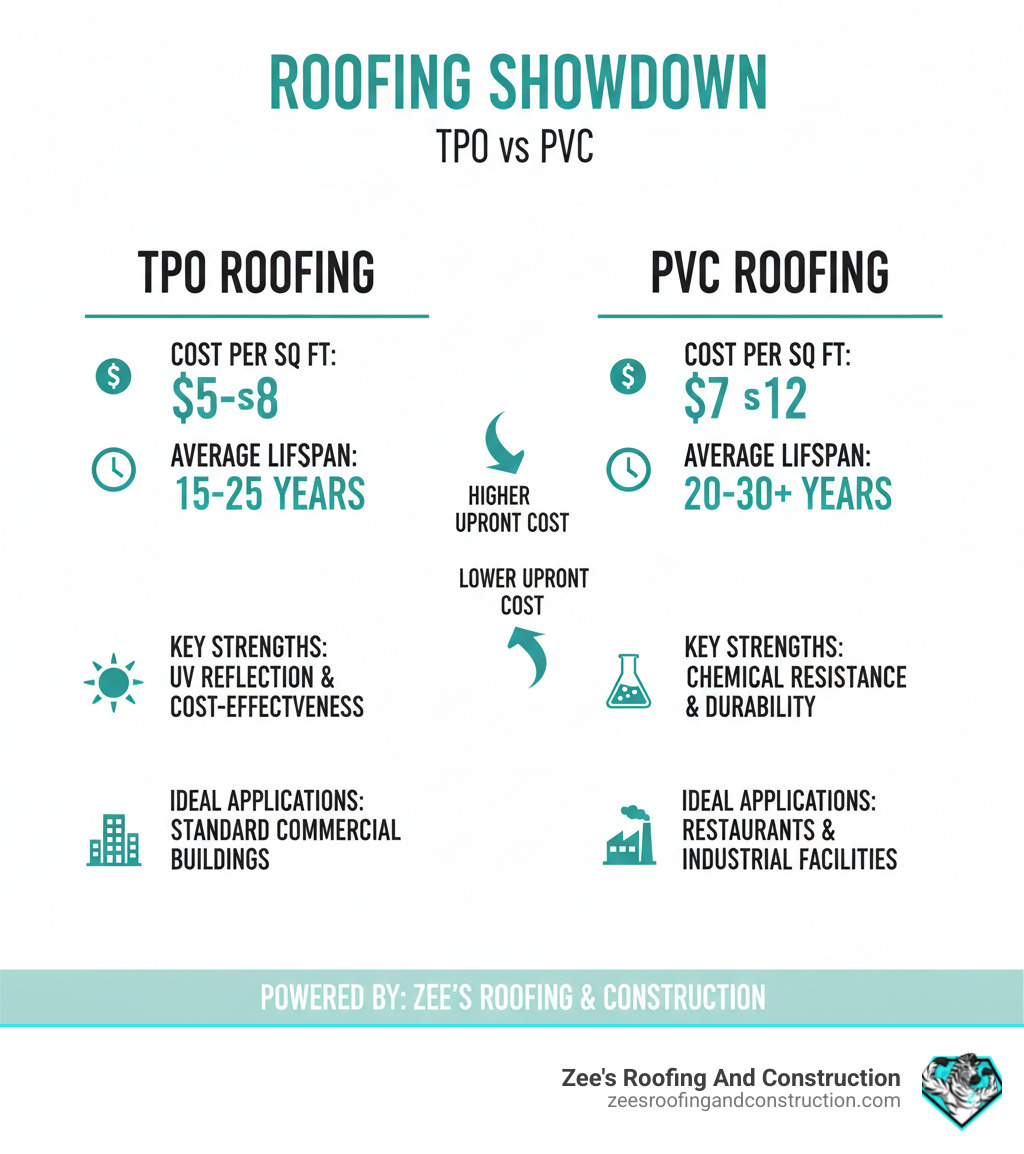
Quick Comparison: TPO vs PVC Roofing
| Feature | TPO | PVC |
|---|---|---|
| Cost | $5-$8 per sq ft | $7-$12 per sq ft |
| Lifespan | 15-25 years | 20-30+ years |
| Best For | Budget-conscious projects, standard commercial buildings | Restaurants, chemical exposure, demanding environments |
| Chemical Resistance | Moderate (sensitive to grease/oils) | Excellent (resists oils, grease, chemicals) |
| Fire Resistance | Good | Superior |
| Energy Efficiency | Reflects up to 87% of UV rays | Reflects 70-80% of UV rays |
Both materials are thermoplastic membranes that reflect heat, reduce energy costs, and create watertight barriers through heat-welded seams. TPO is typically the more economical choice with strong UV resistance, making it popular for standard commercial applications. PVC costs more upfront but offers superior chemical resistance and durability, especially in harsh environments like restaurants or industrial facilities.
The right choice depends on your specific building needs, exposure to chemicals, budget, and long-term performance expectations. In Central Florida’s intense sun and storm-prone climate, both materials perform well—but understanding their differences helps you make the smartest investment for your property.
I’m Mike Martinez, founder of Zee’s Roofing & Construction. My veteran-led team has guided countless Central Florida property owners through the tpo vs pvc roofing decision. We take the time to assess your roof’s specific demands to recommend the best solution for your building and budget.
What Are TPO and PVC Roofing Membranes?
When considering flat or low-slope roofing for your Central Florida business, you’ll encounter TPO and PVC. Both are single-ply membranes: a single layer of synthetic material creating a watertight barrier. As thermoplastic materials, they soften when heated, allowing us to heat-weld the seams. This process creates a monolithic, seamless bond across the roof, crucial for protection against Florida’s heavy rain and humidity.
Designed for Commercial Roofing applications, these lightweight membranes install faster than traditional multi-layered systems without sacrificing durability.
TPO (Thermoplastic Olefin)
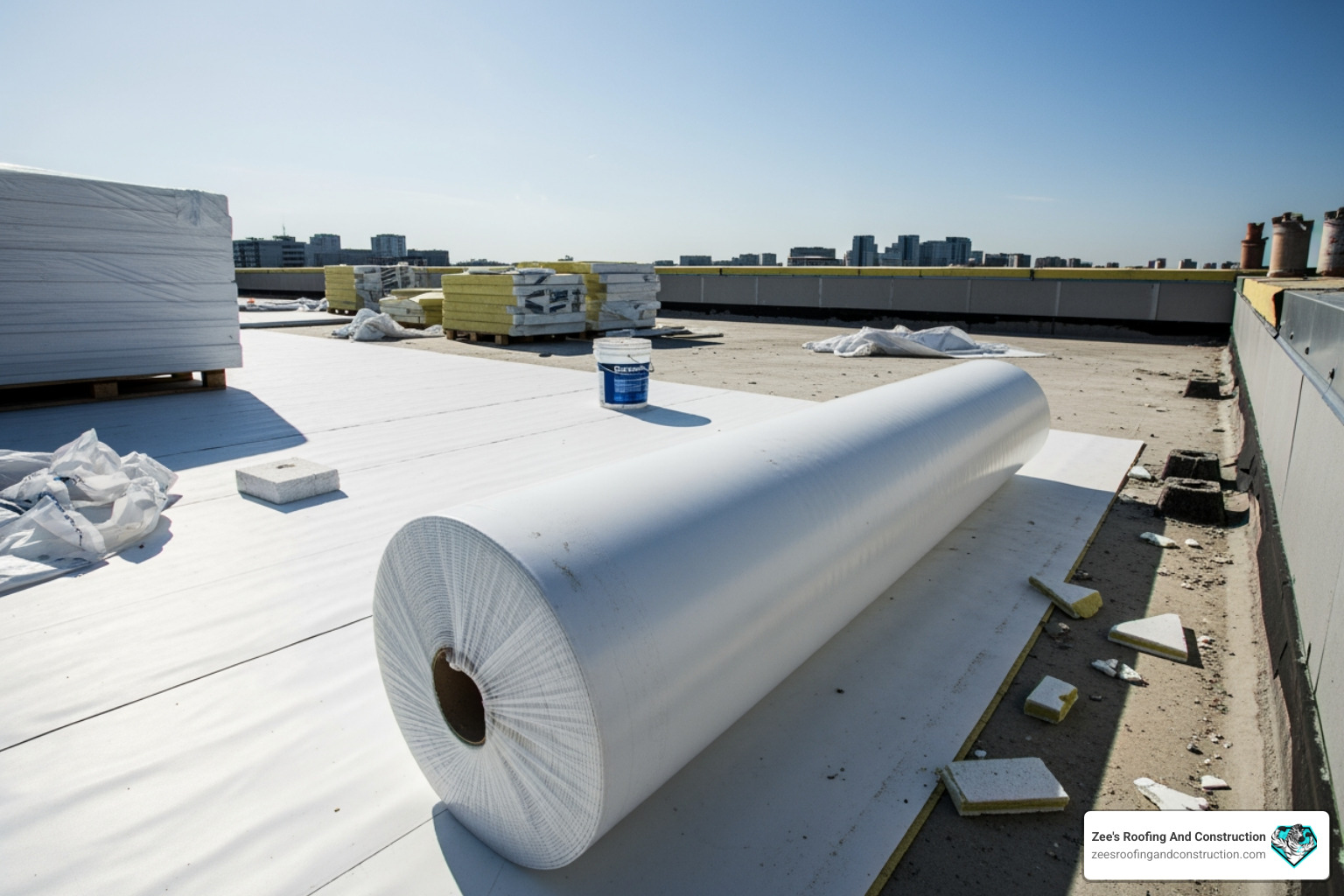
TPO (Thermoplastic Olefin) is a blend of polypropylene and ethylene-propylene rubber reinforced with a polyester mat for strength. A key feature is its lack of plasticizers—chemical additives used for flexibility that can degrade over time. TPO achieves flexibility naturally.
Introduced in the 1990s, TPO quickly became a market leader, used in 40% of new roof installations and 30% of reroofing jobs according to a 2015 NRCA market survey. For Central Florida businesses, TPO Roofing offers a compelling mix of strong UV resistance, energy efficiency, and cost-effectiveness. Its reflective white surface helps lower cooling costs under the Florida sun.
PVC (Polyvinyl Chloride)
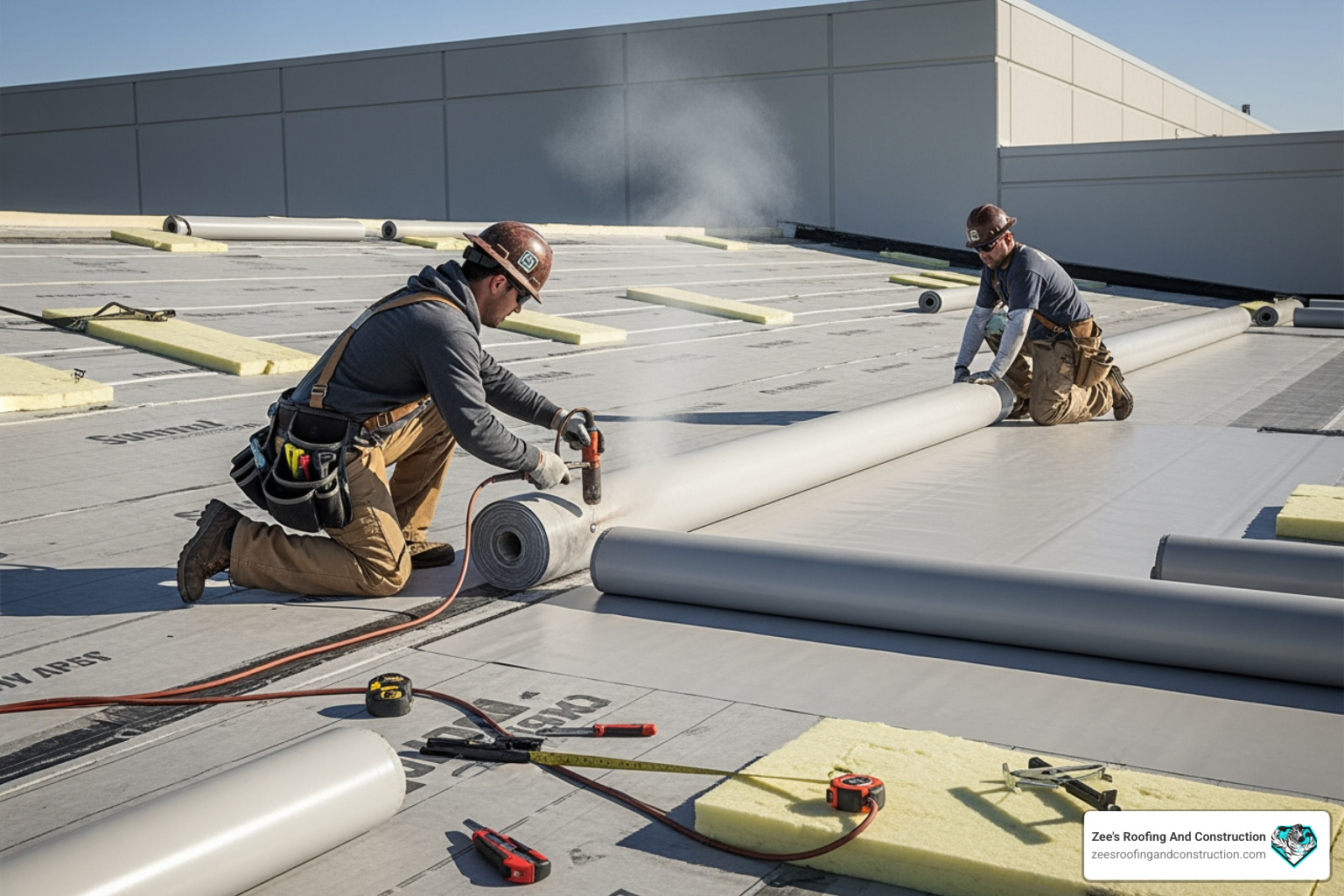
PVC (Polyvinyl Chloride) is made from a polyvinyl chloride polymer. Unlike TPO, it uses plasticizers for flexibility, which aids installation and performance in Florida’s temperature swings. A typical PVC membrane has two layers of PVC with a polyester reinforcement scrim between them for added strength and durability.
PVC has a much longer track record, used in North America since the 1970s, offering over 50 years of proven performance data. Modern formulations often include KEE (Ketone Ethylene Ester) additives to improve longevity by helping retain plasticizers. Understanding these differences in composition and history is key when comparing tpo vs pvc roofing for your Central Florida property.
Head-to-Head Comparison: TPO vs PVC Roofing
Evaluating tpo vs pvc roofing side-by-side is crucial for your Central Florida property. While both are solid choices for flat roofs, their distinct traits affect performance and cost. TPO’s market growth is significant, used in 40% of new installations and 30% of reroofing projects per NRCA market survey data. However, PVC’s long track record makes it a top contender for demanding environments. Both materials adhere to rigorous ASTM International standards, ensuring quality and performance.
| Feature | TPO (Thermoplastic Olefin) | PVC (Polyvinyl Chloride) |
|---|---|---|
| Lifespan | 15-25 years (average just under 25 years) | 20-30+ years (average 25 years) |
| Installed Cost/Sq. Ft. | $5 to $8 | $7 to $12 |
| Puncture Resistance | Good (can be susceptible to punctures) | Superior (highly resistant to punctures and physical wear) |
| Chemical Resistance | Moderate (sensitive to oils, grease, animal fats) | Excellent (highly resistant to oils, grease, chemicals, jet fuel) |
| Fire Resistance | Good (meets industry standards, requires additives) | Superior (excellent flame-retardant properties, Class A ratings) |
| Energy Efficiency | Reflects up to 87% of UV rays (white TPO) | Reflects 70-80% of UV rays (white/light gray PVC) |
Durability and Lifespan
Longevity is a top concern for property owners in Orlando and Sanford when discussing tpo vs pvc roofing. PVC roofs generally have a longer lifespan, lasting 20 to 30+ years, thanks to a robust composition proven over decades. TPO roofs are also durable, typically lasting 15 to 25 years.
PVC also offers superior puncture and tear resistance, making it tougher against foot traffic and debris. TPO is strong but can be more susceptible to punctures. In Central Florida, both materials must combat intense UV exposure and heat aging. PVC’s long history provides extensive real-world performance data, while TPO formulations have evolved significantly since the 90s to improve durability, with ASTM standards reflecting these changes.
For either material, membrane thickness is crucial; thicker membranes (e.g., 60-mil or 80-mil) offer better durability and longer manufacturer warranties (15-30 years). At Zee’s Roofing & Construction, our lifetime warranty on full roof replacements provides peace of mind beyond manufacturer coverage.
Cost and Value: A TPO vs PVC Roofing Breakdown
When comparing tpo vs pvc roofing costs, it’s important to look beyond the initial price. TPO is more budget-friendly upfront, typically costing $5 to $8 per square foot installed. This makes it appealing for large roofs or tighter budgets. PVC is more expensive, ranging from $7 to $12 per square foot installed.
However, PVC often provides better long-term value due to its longer lifespan and superior durability. To understand the true cost, we calculate the lifecycle cost: the total cost divided by the service life. For example, a more expensive PVC roof lasting 30 years can have a lower annual cost than a cheaper TPO roof lasting 20 years. The best return on investment depends on your building, ownership plans, and roof exposure. We help Central Florida property owners analyze these factors to make the smartest financial decision.
Energy Efficiency and Reflectivity
In Central Florida’s relentless sun, energy efficiency is key to managing operating costs. Both tpo vs pvc roofing excel as cool roofs, reflecting solar energy to reduce heat absorption. This keeps your building cooler, lessens the load on your AC system, and lowers energy bills.
TPO systems are especially impressive, with white membranes reflecting up to 87% of UV rays. This performance earns them ENERGY STAR® ratings and helps with LEED certification. PVC systems are also highly efficient, reflecting 70-80% of UV rays and meeting ENERGY STAR® and LEED requirements.
While TPO has a slight edge in reflectivity, both materials offer significant energy savings for Central Florida buildings compared to darker roofs. The choice depends on whether you need maximum reflectivity or if the excellent performance of either is sufficient.
Chemical and Fire Resistance
The practical differences in the tpo vs pvc roofing debate become clear when considering chemical and fire resistance. PVC roofing excels at chemical resistance, making it the superior choice for environments with exposure to oils, grease, and harsh chemicals. For restaurants in Orlando, food processing plants, or industrial facilities, PVC is the right answer as it withstands degradation from these substances.
TPO is sensitive to oils and grease, which can cause premature failure on roofs with kitchen exhaust vents. It’s not a bad product, but it must be matched to the right environment.
For fire resistance, PVC also has an edge. Its chlorine content acts as a natural fire retardant, helping it achieve Class A fire ratings. TPO meets fire safety standards but requires added retardants to achieve the same ratings. For buildings with strict fire code requirements or for property owners wanting extra peace of mind, PVC’s inherent fire resistance is a significant benefit.
Installation, Maintenance, and Climate Performance
Choosing between tpo vs pvc roofing is an investment in a system requiring expert installation and care, especially in Central Florida’s harsh climate. Proper installation and maintenance determine if a roof lasts 15 or 30 years. While several installation methods exist, heat-welding is the gold standard for both TPO and PVC. This process melts membrane edges together, creating seams stronger than the material itself—a seamless barrier against our heavy rains.
At Zee’s Roofing & Construction, our veteran-led team has perfected these techniques. We know that expert installation is critical for performance, and we bring precision to every Roof Service we provide.
Installation and Maintenance for TPO vs PVC Roofing
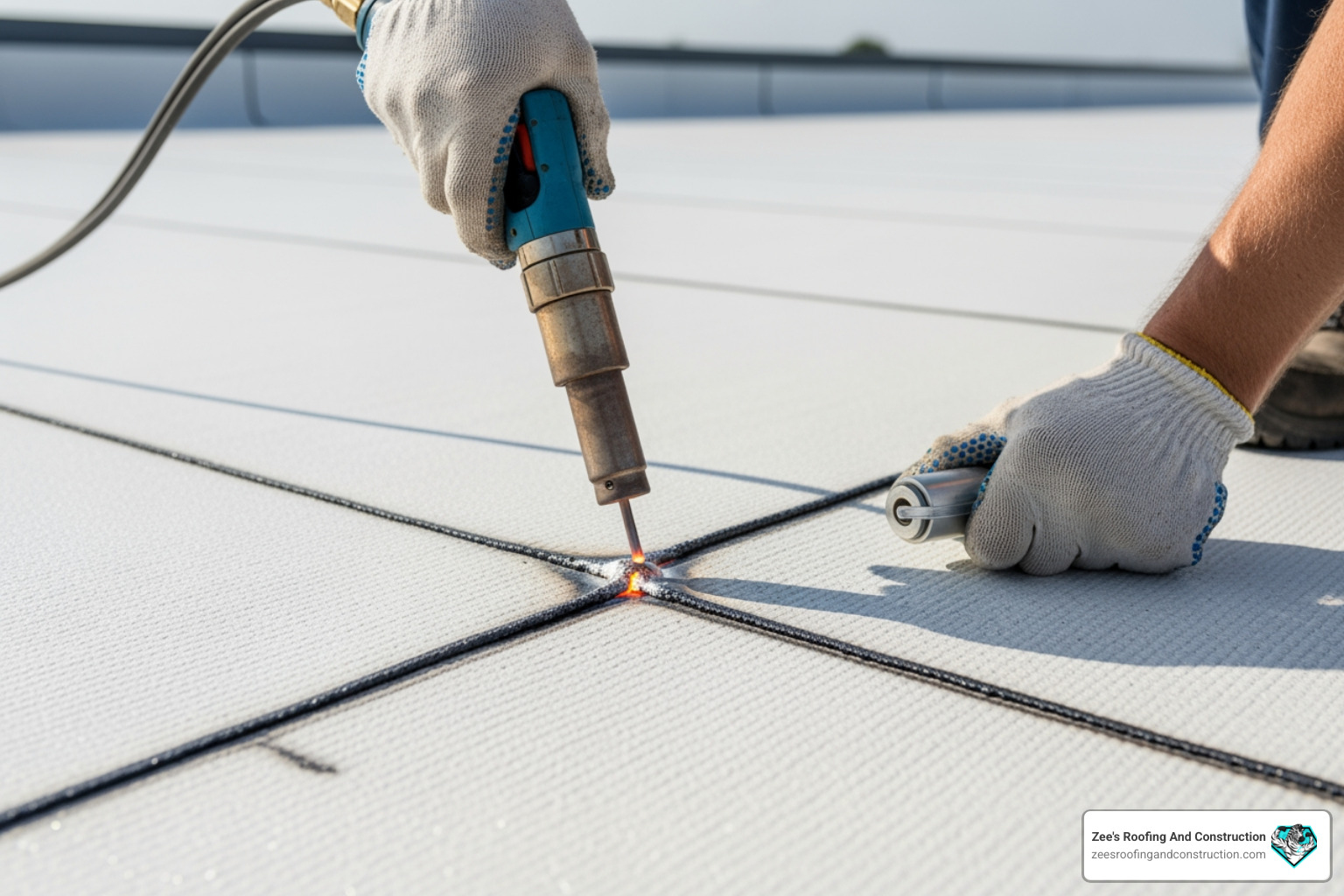
Though both use heat-welded seams, installation differs. TPO is often faster on large, simple roofs because it comes in wider sheets (up to 12 feet), meaning fewer seams. This speeds up coverage on commercial buildings in Apopka and Deltona. Some TPO systems also have factory-applied adhesive, reducing on-site VOCs for occupied buildings.
PVC’s superpower is flexibility, ideal for complex roofs with many penetrations like HVAC units or skylights. Its pliability allows for precise, watertight seals around details and makes repairs easier. TPO can be less forgiving during repairs, requiring a more delicate touch.
For both systems, routine maintenance is key to maximizing lifespan. This includes routine cleaning to remove debris and keeping drains clear to prevent standing water. We recommend annual inspections for our Central Florida clients to catch minor issues like punctures or seam problems before they escalate. Prompt repairs, like patching or re-welding, are straightforward and crucial for longevity.
Performance in Different Climates
Central Florida’s climate—intense sun, high humidity, thunderstorms, and hurricanes—is a stress test for any roof. Both tpo vs pvc roofing systems are well-suited for this environment. Their reflective surfaces help manage cooling costs for businesses in Winter Garden and Bay Hill.
UV resistance is non-negotiable in Florida, and both materials offer strong protection, though quality varies by manufacturer. TPO’s flexibility helps it handle rapid temperature changes, like a cool-down from an afternoon thunderstorm.
PVC shines in high-wind situations like hurricanes, thanks to its tear resistance and strong, heat-welded seams, which create a barrier that resists wind uplift. A shared vulnerability for both is standing water. Ponding water is the silent killer of flat roofs in Central Florida, accelerating material degradation. Proper roof slope and drainage are critical to shed water quickly and protect your investment, which is why we always assess drainage during inspections.
Frequently Asked Questions about TPO and PVC
When you’re considering tpo vs pvc roofing for your Central Florida property, you likely have questions. We hear these same concerns from business owners across Orlando, Sanford, and Lake Mary all the time. Let me address the most common ones based on our years of experience helping property owners make this important decision.
Which roof lasts longer, TPO or PVC?
PVC generally has a longer lifespan, lasting 20 to 30 years or more, while TPO typically lasts 15 to 25 years. However, the actual lifespan for either material depends heavily on factors like material thickness (a thicker 80-mil membrane outlasts a 45-mil one), installation quality, and regular maintenance. Proper installation and care can add years to any roof’s life. At Zee’s Roofing & Construction, our lifetime warranty on full roof replacements underscores our commitment to quality materials and installation, ensuring a long-lasting roof.
Which roofing material is better for a restaurant?
For restaurants and commercial kitchens, PVC is the clear winner. Its excellent chemical resistance allows it to withstand oils, grease, and fats from exhaust vents without degrading. TPO is sensitive to these substances, which can cause premature failure. For a restaurant in Winter Park or a food processing facility in Apopka, investing in a PVC roof prevents costly early replacements and is the right choice for that environment.
Is TPO or PVC more environmentally friendly?
TPO is generally considered the more eco-friendly option. It contains no plasticizers, is 100% recyclable, and has a manufacturing process with a lower environmental footprint. PVC is also recyclable, but its production involves chlorine and plasticizers, which can be a concern for some. Both materials, however, are energy-efficient cool roofs that reduce a building’s carbon footprint and can contribute to LEED certification. The choice involves weighing manufacturing concerns against your building’s performance needs.
Your Best Choice for a Florida Roof
When choosing between tpo vs pvc roofing for your Central Florida property, the right answer depends on your building’s specific needs. For standard commercial buildings in Alafaya or Winter Park where budget and energy efficiency are key, TPO is an excellent value, reflecting up to 87% of UV rays at a cost of $5-$8 per square foot. For more demanding environments like restaurants in Orlando or industrial plants in Sanford, PVC’s superior chemical resistance and durability justify the higher investment, offering protection for 30 years or more.
However, the quality of your installation is just as important as the material. A poor installation will cause any membrane to fail. Precision heat-welding, expert flashing, and proper drainage are non-negotiable.
This is where our veteran-led team at Zee’s Roofing & Construction excels. We provide custom recommendations and build long-term protection, backing our full roof replacements with a lifetime warranty. Whether you choose TPO roofing or PVC, it’s a major investment. Contact us for a comprehensive evaluation to ensure you make the right choice. Your roof should be an asset that protects your business for decades.