

Table of Contents
Why Hurricane Proof Roofing Matters in Central Florida
Central Florida homeowners face serious wind and rain threats every hurricane season. Choosing the right hurricane proof roofing Florida system can mean the difference between minor cleanup and a total roof replacement. This guide covers building codes, material options, hidden components, insurance benefits, and warning signs that your current roof may not be ready for the next big storm.
If you live anywhere from Orlando to Windermere or Altamonte Springs, you already know what a summer afternoon thunderstorm can do. Now imagine that same energy multiplied during a named storm. The roofing choices you make today directly affect how your home holds up when it counts.
Florida Building Code Basics for Wind and Uplift Resistance
Florida has some of the strictest building codes in the country when it comes to roofing. After Hurricane Andrew in 1992, the state completely rewrote its standards. Today, the Florida Building Code requires roofs in most of Central Florida to withstand sustained winds of 130 mph or higher, depending on your specific location and exposure category.
Uplift resistance is just as important as shingle adhesion. When high winds pass over a roof, they create a suction effect that tries to pull roofing materials away from the deck. Proper nailing patterns, sealed decking, and rated underlayments all work together to resist this force. If your roof was installed before 2002, there is a good chance it does not meet current wind code requirements.
The Building America Solution Center, managed by the Pacific Northwest National Laboratory, offers a detailed breakdown of how wind loads affect residential roofing systems. It is one of the best government-backed resources for understanding these forces.
Impact-Resistant Shingles vs Metal vs Tile in Hurricanes
Not all roofing materials perform the same way in a hurricane. When we talk about hurricane proof roofing Florida options, material selection is one of the biggest decisions you will make. Here is a straightforward comparison of the three most common storm resistant roof systems used in Central Florida.
Material | Wind Rating | Best For |
Impact-Resistant Shingles | Up to 130 mph (Class 4) | Budget-friendly storm protection |
Standing Seam Metal | Up to 180 mph | Maximum wind resistance, longevity |
Concrete/Clay Tile | Up to 150 mph | Durability and heat reflection |
On job sites across Orlando, the impact resistant roofing Orlando homes benefit from most often is standing seam metal. Metal panels interlock, which eliminates the lifted-tab problem that plagues standard three-tab shingles during high wind events. Tile is also a strong performer, but installation technique matters. Tiles must be mechanically fastened, not just set in mortar, to qualify as the high wind rated roofs Florida code demands.
Underlayments, Fasteners, and Decking: The Hidden Hurricane Heroes
The materials you see on the outside of your roof are only part of the story. What is underneath often determines whether your roof survives a hurricane or ends up in your neighbor’s yard.
Underlayment
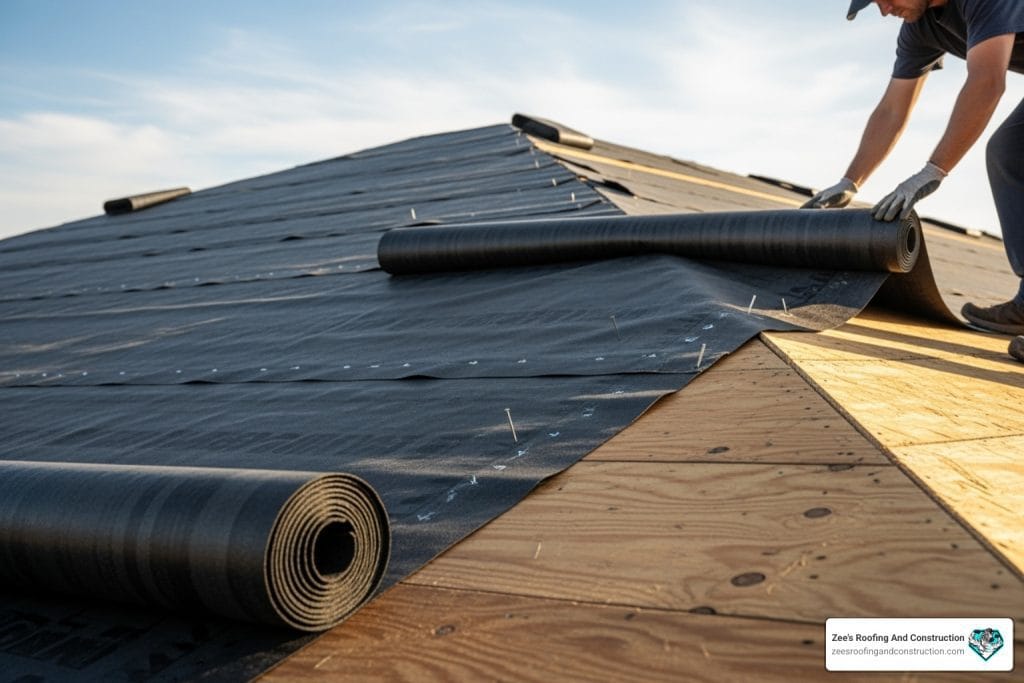
Self-adhering modified bitumen underlayment is the gold standard for hurricane zones. Unlike synthetic felt that is stapled down, peel-and-stick underlayment bonds directly to the roof deck. If shingles or tiles blow off, this layer keeps water from entering your home. Florida code requires it along eaves and valleys at minimum, but full-deck application is the smart move for any storm resistant roof system.
Fasteners
Ring-shank nails grip plywood decking far better than smooth-shank nails. For metal roofing, stainless steel screws with neoprene washers prevent both pullout and water intrusion. Nail spacing matters too. In high wind zones, most manufacturers require a six-nail pattern per shingle rather than the standard four.
Roof Deck Attachment
Your plywood or OSB decking must be properly fastened to the trusses. Re-nailing or adding screws to the deck-to-truss connection is one of the most cost-effective hurricane roof upgrades Orlando and Central Florida homeowners can make. A solid deck connection is the foundation of every truly hurricane proof roofing Florida installation.
Insurance, Discounts, and Documentation for Wind Mitigation
One of the biggest financial benefits of upgrading to a hurricane proof roofing Florida system is the insurance savings. Florida law requires insurance companies to offer discounts for verified wind mitigation features. A licensed inspector fills out a Wind Mitigation Inspection Form, and the results can reduce your premium significantly.
Features that typically qualify for discounts include:
- Roof-to-wall connections using hurricane clips or straps instead of toe nails
- Secondary water resistance through sealed roof decking or peel-and-stick underlayment
- Impact-rated shingles, metal panels, or tile with proper mechanical fastening
- Roof geometry such as hip roofs, which perform better in high winds than gable roofs
- FBC-equivalent or current Florida Building Code roof covering
Keep every receipt, permit, and inspection report from your roof project. Your roofing contractor should provide documentation that supports your wind mitigation filing.
Signs Your Current Roof May Not Meet Modern Hurricane Standards
Many Central Florida homes still have roofs that were installed before the current building code took effect. If your roof was put on before 2002, or if it has gone through multiple storms without a professional inspection, it may not be up to modern standards for high wind rated roofs Florida requires.
Watch for curling or lifting shingles, especially along edges and ridges. Check your attic for daylight coming through the decking or signs of past water stains. If your roof uses three-tab shingles with a four-nail pattern, it likely does not meet the current wind code. Missing or corroded hurricane straps at the roof-to-wall connection are another red flag.
Homeowners in Orlando, Windermere, Altamonte Springs, and surrounding areas should schedule an inspection well before storm season starts. Waiting until a named storm is in the forecast means you will be competing with every other homeowner for contractor availability.
Next Steps: Upgrading to a Hurricane-Ready Roof Before Storm Season
Upgrading your roof to meet or exceed current Florida wind resistance standards does not have to happen all at once. Start with a professional inspection to understand what you have now. From there, a qualified roofing team can recommend the most effective upgrades for your budget and timeline.
Whether that means re-nailing your deck, adding peel-and-stick underlayment, upgrading to impact resistant roofing, or doing a full tear-off with standing seam metal, the important thing is to act before storm season. Central Florida hurricane season runs from June through November, and the earlier you schedule work, the better your options.
If you are ready to talk about hurricane roof upgrades for your home, reach out to Zee’s Roofing and Construction to schedule an inspection and get a clear plan in place.
Frequently Asked Questions
What makes a roof truly hurricane proof in Florida?
No roof is completely hurricane proof, but a properly installed hurricane proof roofing Florida system combines rated materials, sealed underlayment, proper fasteners, and code-compliant deck-to-truss connections. Together, these layers create a system designed to resist high winds and prevent water intrusion during a storm.
How much can I save on insurance with a wind mitigation inspection?
Savings vary by insurer and the specific features on your roof, but many Central Florida homeowners see annual premium reductions of several hundred to over a thousand dollars. A licensed inspector completes the wind mitigation form, and your insurance company applies the eligible credits.
Is metal roofing the best option for hurricanes in Central Florida?
Standing seam metal is one of the top performers for high wind rated roofs Florida homeowners choose. Its interlocking panels resist uplift better than individual shingles or tiles. However, impact-resistant shingles and mechanically fastened tile are also solid choices depending on your budget and neighborhood requirements.
When should I schedule a roof inspection before hurricane season?
Aim for early spring, between March and May. This gives you enough time to complete any repairs or upgrades before June, when Florida hurricane season officially begins. Waiting until summer means longer wait times and fewer available contractors in the Orlando and Central Florida area.