

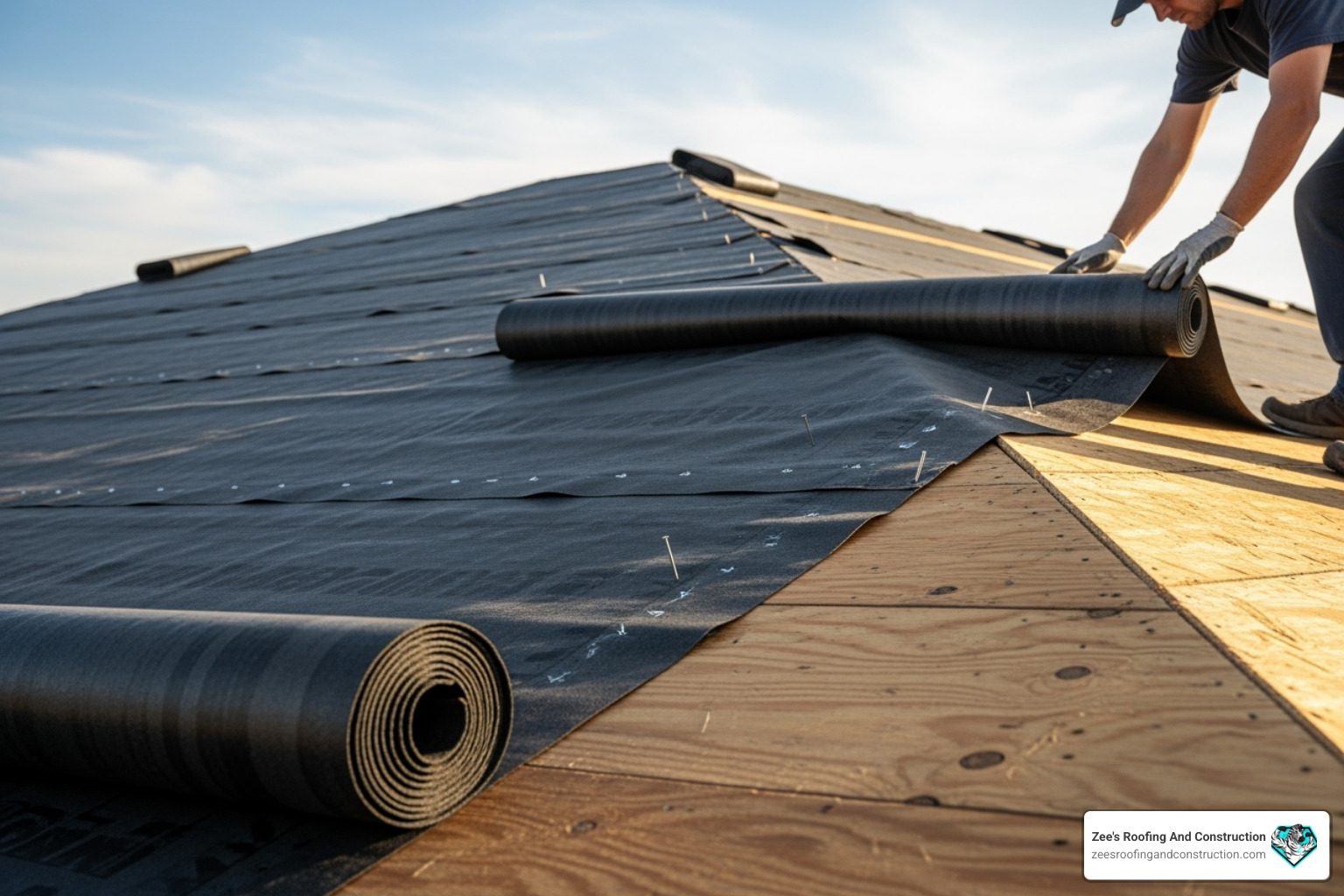
The Hidden Layer That Protects Your Florida Home
Asphalt shingle underlayment is the water-resistant barrier installed directly on your roof deck, beneath your shingles, acting as a critical second line of defense against moisture, wind-driven rain, and the elements.
Quick Answer: Choosing the Best Underlayment for Your Florida Roof
- Synthetic underlayment – Best for most Florida homes (durable, lightweight, water-repellent, lasts 25-50 years)
- Rubberized asphalt – Best for vulnerable areas like valleys, eaves, and around chimneys (waterproof, self-sealing)
- Asphalt-saturated felt – Most affordable option but less durable (tears easily, absorbs moisture, lasts 15-20 years)
Beneath the shingles on your roof lies an unsung hero most homeowners never see: the underlayment. This barrier protects your roof deck from water damage when Central Florida’s storms blow shingles loose or drive rain sideways. Without quality underlayment, even the best shingles can’t fully protect your home from rot, mold, and structural damage.
Choosing the right underlayment depends on your budget, roof design, and Florida’s unique climate challenges—intense sun, heavy rain, and hurricanes. Understanding your options is key to a smart investment that protects your home for decades.
I’m Mike Martinez of Zee’s Roofing & Construction. My team has installed countless asphalt shingle underlayment systems across Central Florida. Our military background taught us that a strong defense starts with a solid foundation—and that’s what quality underlayment provides for your roof.
What is Roof Underlayment and Why is it Critical?
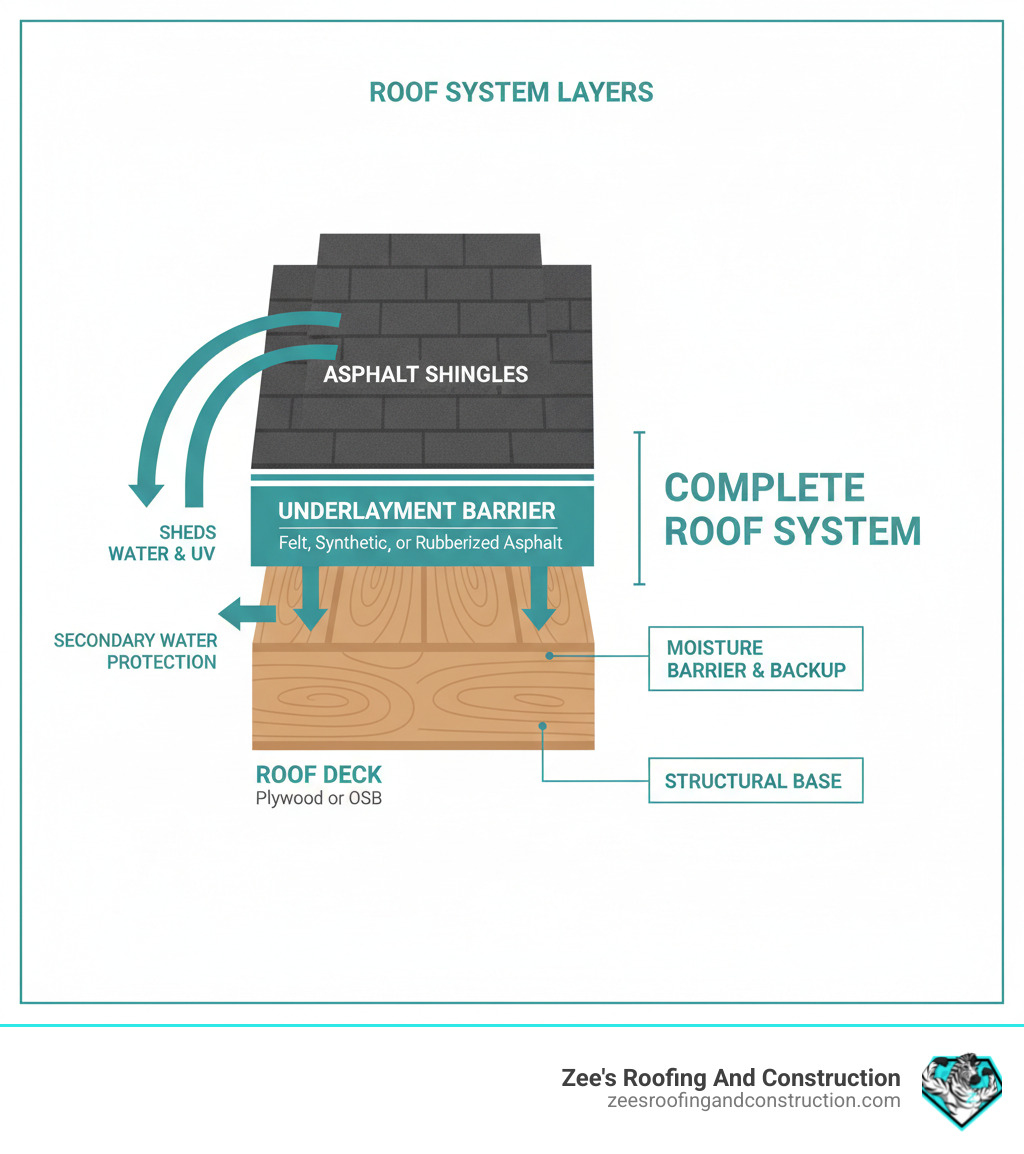
Your asphalt shingle underlayment is the water-resistant layer sitting between your roof deck and shingles. It’s your roof’s secondary line of defense, protecting your home when wind-driven rain gets past a lifted shingle or a branch causes damage during a storm.
The underlayment’s vital job is to create a moisture barrier that keeps water from reaching your roof deck. This single layer prevents a cascade of problems, including rot, mold, and water stains on your ceilings.
A proper roof is a complete system working together, and underlayment is one of its most important pieces. Without it, even premium shingles can’t fully protect your investment.
Want to understand how all these layers work together? Our guide to Asphalt Roofing breaks down the complete roof system. You can also read more about how underlayment protects your home in our detailed article.
Protection from the Elements
Florida weather throws everything at your roof—torrential downpours, hurricane-force winds, and scorching UV rays. Your underlayment stands guard against all of it.
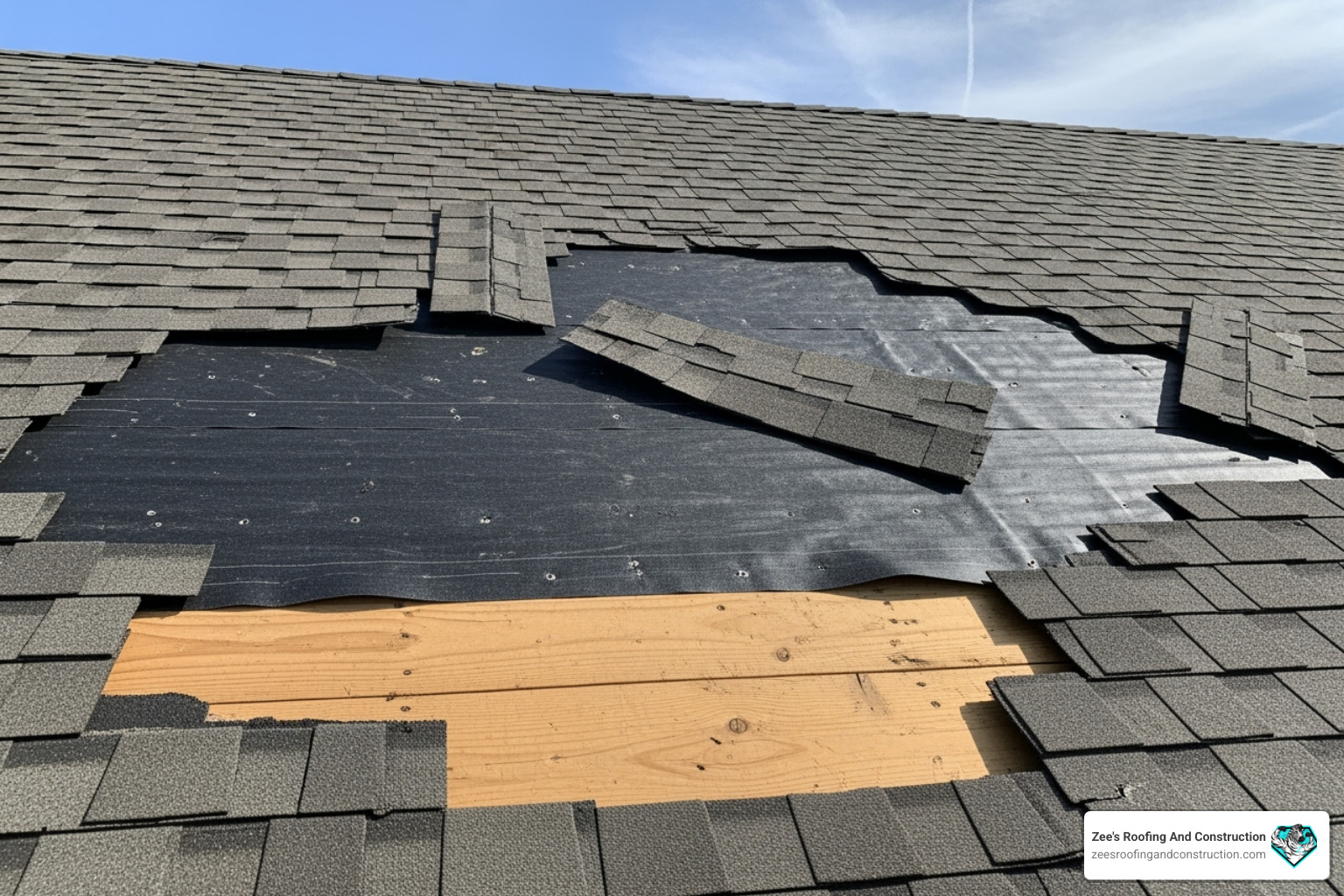
When wind uplift tears shingles loose, the underlayment becomes your temporary roof. It buys you precious time for repairs, keeping rain out of your attic and saving you from thousands in potential water damage.
Heavy hailstones and airborne debris can puncture shingles. Quality underlayment provides an extra layer of resistance, protecting the vulnerable wood deck underneath.
During installation, the underlayment provides essential temporary weather protection while the deck is exposed, so a surprise afternoon thunderstorm won’t flood your attic.
The Foundation for a Flawless Finish
Beyond weather protection, underlayment plays a surprising role in your roof’s appearance and performance.
A quality underlayment creates a smooth surface for shingle installation. It lies flat without wrinkles, so your shingles install cleanly and look sharp, preventing the wavy appearance of an amateur job.
Many modern underlayments offer fire resistance, adding another layer of safety to your home’s defense system.
In Florida’s humid climate, some underlayments function as a vapor barrier, controlling moisture flow between your attic and the outside. This helps prevent condensation that can lead to mold and wood rot—problems we often see in improperly ventilated attics.
Your asphalt shingle underlayment works hard every day to keep your home dry, safe, and looking great. To learn more about all the ways this hidden layer protects your home, check out this resource on functions of underlayment.
The Main Types of Asphalt Shingle Underlayment
You have three main options for asphalt shingle underlayment. Each has distinct advantages, from budget-friendly to high-performance. After years of installing roofs across Central Florida, we’ve worked with all of them. Here’s what you need to know to choose the right one for your home.
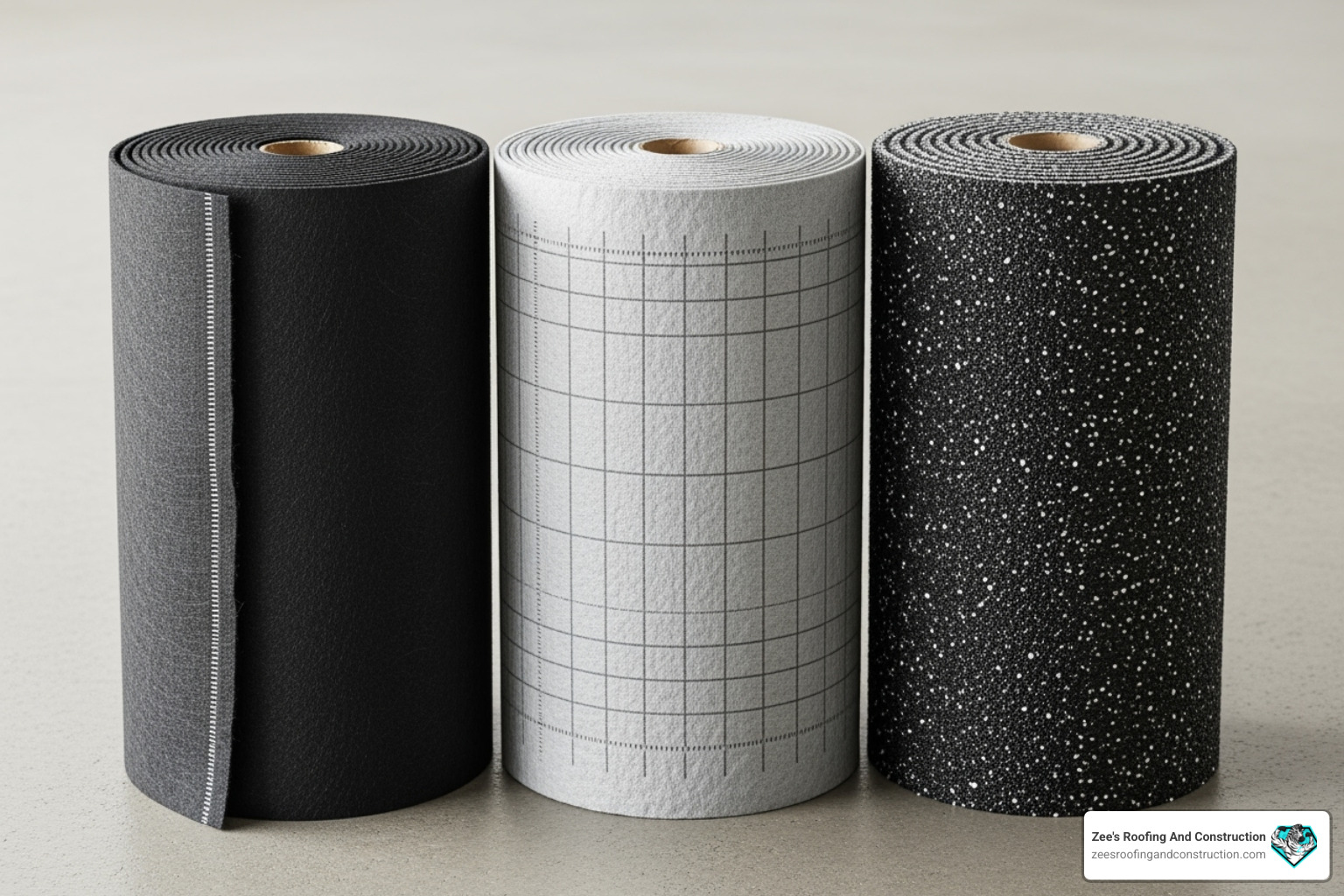
Here’s a quick comparison to help you see the differences at a glance:
| Feature | Asphalt-Saturated Felt (Tar Paper) | Synthetic Underlayment | Rubberized Asphalt (Peel-and-Stick) |
|---|---|---|---|
| Cost (per sq ft) | $0.10 – $0.50 | $0.40 – $0.90 | $0.75 – $1.50 |
| Lifespan | 15-20 years | 25-50 years | 30-50+ years |
| Weight | Heavy (15lb, 30lb) | Very Light (5-10x lighter than felt) | Moderate (can be heavier due to asphalt/rubber content) |
| Tear Resistance | Low (prone to tearing, especially when wet) | High (less prone to tearing in high winds) | High (very durable) |
| Water Resistance | Water-resistant (can absorb water) | Superior Water-repellent (does not absorb water) | Fully Waterproof (self-sealing around fasteners) |
| Installation | Prone to wrinkling, can be slippery | Non-skid surface, lays flat, easier to handle | Self-adhering, can be tricky to reposition, non-skid |
| UV Exposure | Very sensitive | Moderate (can be exposed for 30-90 days during installation) | Moderate (can be exposed for limited time) |
Asphalt-Saturated Felt (Tar Paper)
Also known as “tar paper,” this is the traditional choice. It’s made by saturating a mat with asphalt and comes in 15-lb and 30-lb weights. Its biggest advantage is affordability, making it a choice for tight budgets. However, felt tears easily, absorbs moisture (which can cause wrinkles), is heavy, and deteriorates quickly in UV light. Its lifespan is only 15-20 years. While we install it on request, better options now exist. Learn more about all the components that make up a complete roofing system.
Synthetic Underlayment
This modern material is made from engineered polymers and has become our go-to recommendation for most Florida homes. Synthetic underlayment is durable, lightweight, and water-repellent—it sheds water completely instead of absorbing it like felt. This prevents wrinkles and rot. It also lies flat for a smooth finish, often has a non-skid surface for safety, and can withstand UV exposure for 30-90 days, adding flexibility during installation. With a lifespan of 25 to 50 years, it’s an excellent long-term value despite a higher upfront cost than felt. You can read more about why we recommend synthetic materials on our Asphalt Roofing page.
Rubberized Asphalt (Peel-and-Stick)
This premium option, also called “ice and water shield,” has a self-adhering backing that creates a watertight seal directly on the roof deck. It’s completely waterproof and cleverly self-seals around nails and fasteners, creating a watertight gasket around each penetration. We use it in critical spots like roof valleys, eaves, and around penetrations like chimneys and vents. With a lifespan of 30 to 50+ years, it offers best protection. The main drawbacks are its high cost and the need for precise installation. We often recommend a hybrid approach: synthetic underlayment for main roof areas and rubberized asphalt in vulnerable spots. If you’re wondering whether your roof might need attention in these critical areas, our guide on Roof Repair or Replacement: 7 Clear Signs to Watch For can help.
How to Choose the Right Underlayment for Your Florida Home
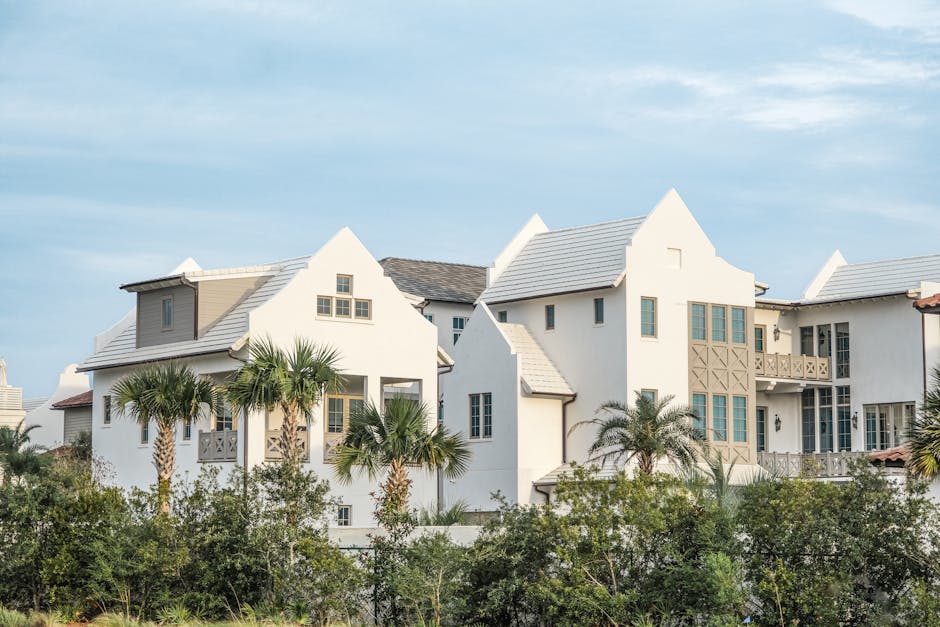
Choosing the right asphalt shingle underlayment for your Central Florida home is crucial. It must withstand our unique climate—intense sun, heavy rain, high humidity, and hurricanes—while fitting your budget and roof design. Through experience, we know there’s no one-size-fits-all answer, as the best choice depends on your home’s specific architecture.
Matching Underlayment to Florida’s Climate
Florida’s climate is tough on roofs. We evaluate underlayment based on how it will perform against our weather.
- Hurricane resistance: Wind-driven rain can get under lifted or missing shingles. Synthetic underlayment’s tear resistance helps it stay intact, while rubberized asphalt’s waterproof seal prevents penetration.
- High humidity: Felt can absorb moisture, promoting mold. Synthetic materials are made of polymers that resist mold and don’t absorb humidity.
- Heavy rainfall: Underlayment must channel water efficiently, especially in valleys. A waterproof or highly water-resistant material ensures water flows off the roof instead of seeping through.
- UV exposure during installation: Florida’s sun can destroy felt in days. Synthetic underlayment can be exposed for 30-90 days without degrading, offering crucial flexibility during projects.
- Mold and mildew resistance: This is essential in Florida. Synthetic underlayment’s inert polymer composition prevents mold growth.
If you’re weighing whether to go with shingles or another roofing material altogether, our guide on Choosing Your Roof in Florida: Shingle or Metal? Find Out What’s Best For You can help you think through all your options.
Why Roof Pitch and Complexity Matter
Your roof’s design—its pitch, valleys, and penetrations—helps determine the best underlayment.
Low-slope roofs are a challenge because water runs off slowly. We recommend rubberized asphalt for these areas due to its waterproof nature. Florida building codes often mandate this for low-slope roofs because the leak risk is high.
On steep-slope roofs, water runs off faster, but durability is still key. Synthetic underlayment is ideal here: it’s strong, lightweight, and lies flat, ensuring a smooth finish.
Roof valleys channel high volumes of water. We only use rubberized asphalt here because it self-seals around nails, creating an impenetrable barrier.
Penetrations like vents and chimneys are vulnerable spots. We use rubberized asphalt for its self-adhering, watertight seal around these interruptions.
Your roof’s design and Florida’s climate should guide your underlayment choice. A small investment in quality asphalt shingle underlayment now can save you thousands in repairs down the road. If you’re planning a roofing project, check out our article on How to Measure a Roof for Shingles to better grasp the scope of the project.
How Underlayment Impacts Installation, Longevity, and Your Warranty
The asphalt shingle underlayment you choose does more than just protect against water—it affects the safety and efficiency of the installation, the lifespan of your roof, and your warranty coverage.
The Role of Underlayment in a Safe and Efficient Installation
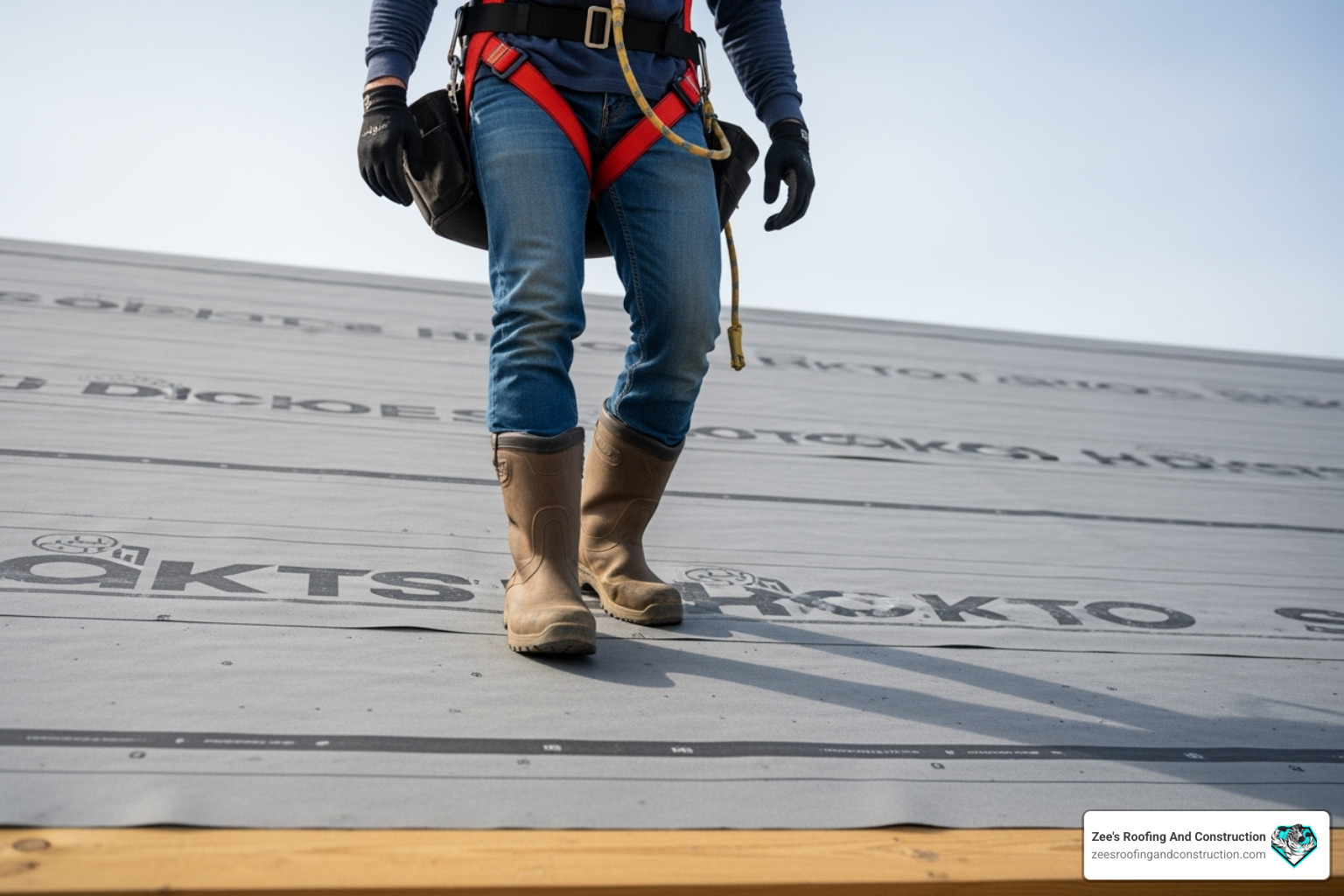
The underlayment we install plays a big role in project safety and efficiency.
- Material weight: Lightweight synthetic underlayment is easier and faster to install than heavy felt, reducing crew fatigue and labor costs.
- Non-skid surface: A non-skid walking surface on synthetic underlayment is a key safety feature, especially on steep or humid Florida roofs, allowing our crew to work confidently.
- Tear resistance: During installation, sudden wind gusts can tear felt, causing delays. Synthetic underlayment is far more resistant to tearing.
- Lies flat: Underlayment that lies flat, like synthetic, creates a smooth surface for shingle installation, preventing wrinkles and ensuring a professional finish.
You can see more about the complete installation process in our guide on How to Install Roof Shingles.
Maximizing Roof Lifespan and Warranty with Quality Asphalt Shingle Underlayment
Your underlayment choice is an investment in your home’s future.
Warranty validation is critical. Shingle manufacturers require specific underlayments; using the wrong type can void your warranty. We ensure your asphalt shingle underlayment meets all specifications for full protection.
Matching lifespans is logical. A 30-year shingle needs an underlayment that lasts just as long. Synthetic and rubberized options last 25-50+ years, ensuring the entire system ages cohesively.
Most importantly, quality underlayment prevents deck rot. It stops moisture from reaching the wood, preserving your home’s structural integrity and preventing costly repairs. Think of premium underlayment as a modest investment that protects your entire home.
To keep your roof performing at its best, we recommend our Yearly Maintenance Programs with 10-Point Roofing Inspection Reports. Regular inspections catch small issues before they become big problems.
Frequently Asked Questions about Asphalt Shingle Underlayment
We talk to a lot of Central Florida homeowners about their roofs. Here are the questions we hear most about asphalt shingle underlayment.
Can I install shingles without underlayment?
No, you should not. Building codes in Central Florida require underlayment, and your roof won’t pass inspection without it. Furthermore, manufacturer warranties require underlayment; installing shingles directly on the deck will void your coverage.
The biggest issue is the risk of leaks and structural damage. Wind-driven rain can get past shingles, and without underlayment, water goes straight to your roof deck. This leads to rot, mold, and costly repairs that far exceed the cost of underlayment. It’s simply not worth the risk.
How long does roofing underlayment last?
Underlayment lifespan depends on the material, and ideally, it should match the lifespan of your shingles.
- Felt underlayment lasts 15-20 years, suitable for basic shingles but not for premium architectural shingles that last 30+ years.
- Synthetic underlayment lasts 25-50 years, making it an excellent match for high-quality shingles. It is engineered to withstand Florida’s climate.
- Rubberized asphalt is the most durable, lasting 30-50+ years. It provides decades of waterproof protection in critical areas.
We typically recommend synthetic or rubberized options because they are designed to handle Florida’s stressful climate.
What’s the difference between breathable and non-breathable underlayment?
This is an important distinction, especially in humid Central Florida.
Breathable underlayment is vapor-permeable, allowing moisture from inside your home to escape through the roof. This is crucial in Florida to prevent moisture from daily activities from getting trapped in the attic, which can cause mold and rot. It works with proper attic ventilation to keep the roof system dry.
Non-breathable underlayment is a complete vapor barrier, stopping moisture movement. It can be useful for absolute waterproofing but requires excellent attic ventilation to prevent trapped moisture problems.
We assess your home’s ventilation and design to recommend the right type of underlayment, preventing condensation and keeping your roof system healthy.
Your Roof’s Best Defense Starts Beneath the Surface
The real protection for your roof isn’t just the shingles you see; it’s the asphalt shingle underlayment beneath them. At Zee’s Roofing & Construction, our experience across Central Florida confirms this hidden layer is critical for your roof’s long-term performance.
Underlayment is an insurance policy for your home. The upfront cost protects you from thousands in potential water damage and repairs. We’ve seen many homes in communities like Sanford and Orlando suffer when homeowners cut corners on this essential component.
Synthetic underlayment is our top recommendation for its durability, water resistance, and long lifespan. Paired with rubberized asphalt in vulnerable areas like valleys, it creates a complete system ready for Florida’s weather.
Our military background taught us to take no shortcuts with protection. We treat every roof like our own, using quality materials and backing our full roof replacements with a lifetime warranty. We aim to exceed standards and earn your trust.
Your home deserves a complete roofing system. If you’re ready to invest in lasting protection, our veteran-led team is here to help. We’ll provide a custom solution for your home’s needs.