

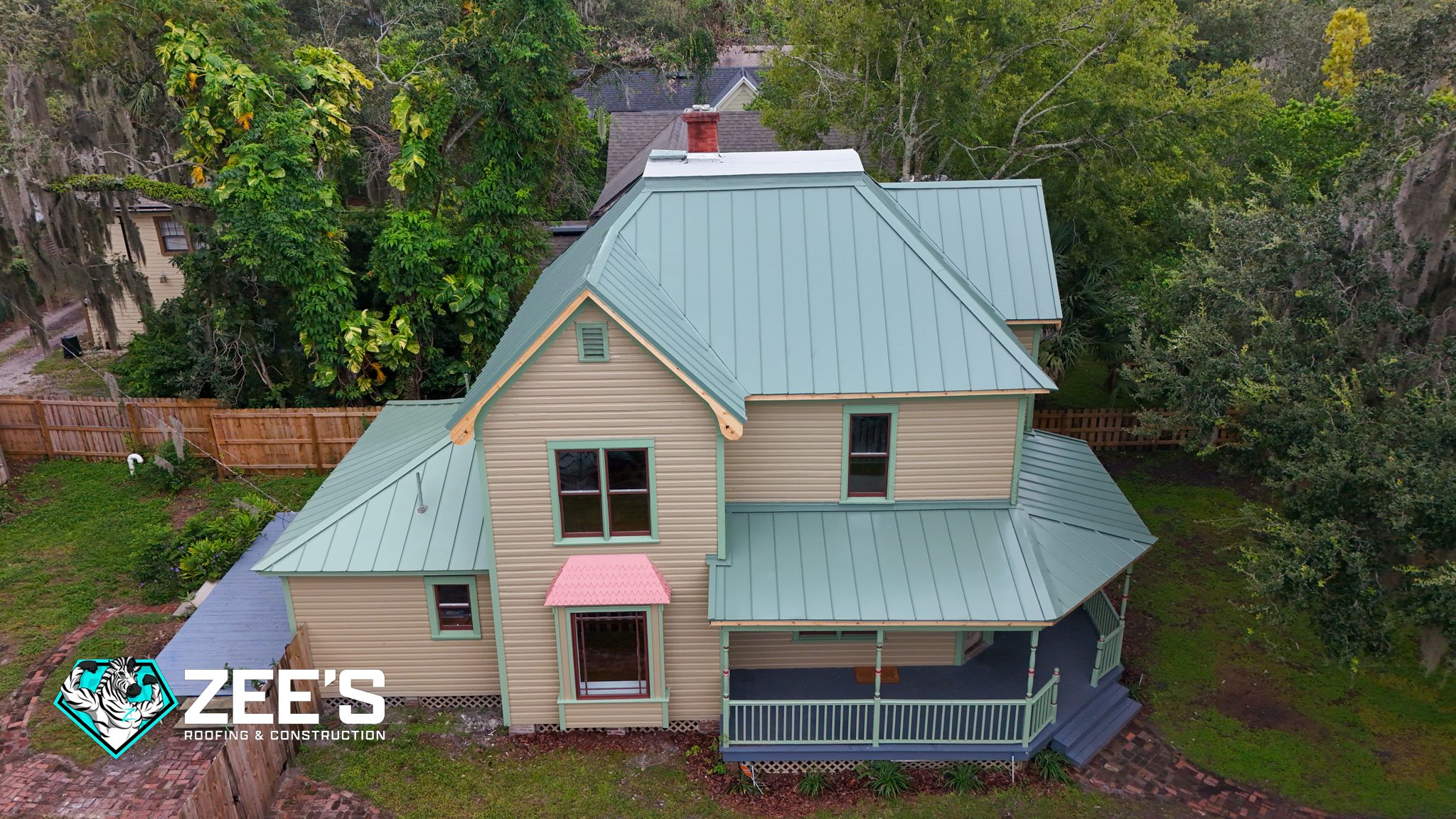
The best roof color for Florida is one of the most practical decisions you can make as a homeowner. In Orlando and across Central Florida, roof color directly affects attic heat, energy bills, HOA compliance, and curb appeal. This guide covers what works in our climate, what materials hold up best, and how to choose a color that lasts.
If you have walked into a Florida attic in July, you already understand the problem. That heat pushes straight through the ceiling, runs your AC ragged, and shortens the life of everything up there. What most homeowners do not know is that selecting the best roof color for Florida is one of the easiest ways to fix it.
Table of Contents
How Roof Color Affects Heat Absorption and Attic Temperature
Dark roofs absorb more solar radiation. A standard dark asphalt shingle in full Florida sun can reach surface temperatures between 150 and 190 degrees on a hot afternoon. That heat radiates straight into your attic and living space below.
Lighter surfaces reflect that energy back into the atmosphere. The U.S. Department of Energy notes that cool-colored roofing products can reduce roof surface temperatures by up to 50 degrees Fahrenheit compared to conventional dark options, which means real savings on your monthly cooling bill.
EPA research on cool roofs also shows that reflective roofing helps reduce urban heat islands, which is a genuine concern in the Orlando metro area where dense suburban development traps heat at the neighborhood level.
Light vs. Dark Roof Florida: The Real Performance Gap
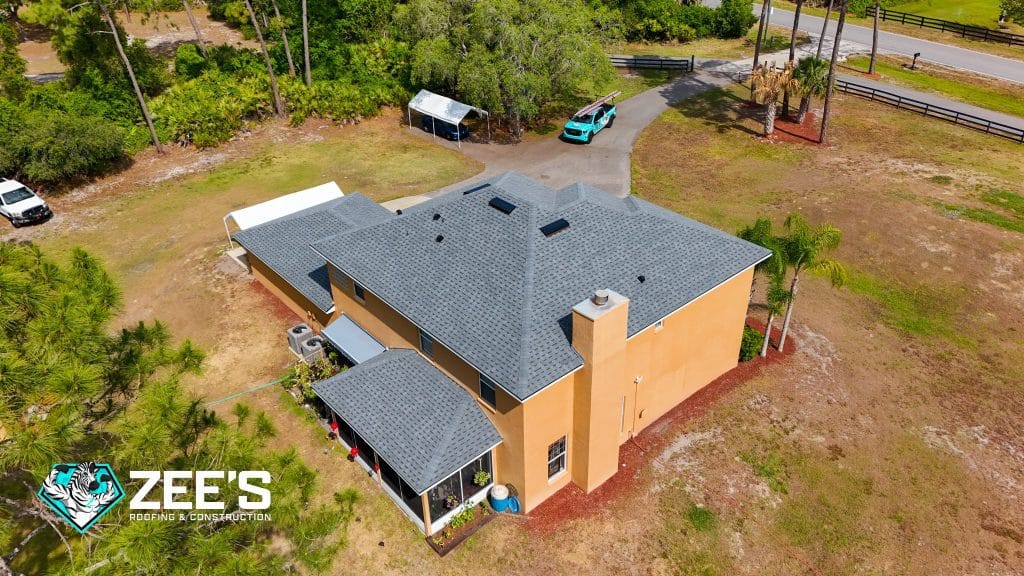
When comparing light vs dark roof Florida options, the performance difference in our climate is significant. A light gray or tan roof in Orlando will consistently use less cooling energy than a charcoal or black alternative. On peak summer days, that difference can show up as 10 to 15 percent on your electric bill.
That said, very light roofs attract more visible algae staining in humid conditions. Medium tones like light gray, warm beige, and clay give you a practical balance of efficiency and lower maintenance.
Best Roof Color for Florida by Material Type
Homeowners searching for the best roof color for Florida often focus only on shade, but material matters just as much. The best roof color for Florida also shifts depending on your roofing substrate. Each product handles heat and reflectivity differently, so color is only part of the equation.
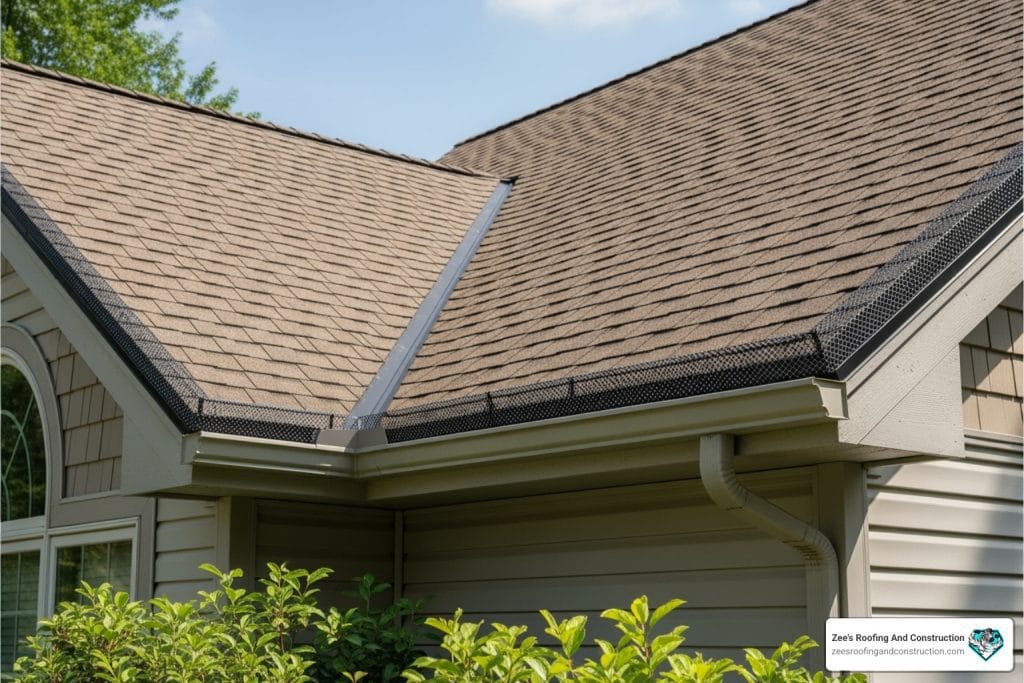
For asphalt shingles, lighter grays, tans, and weathered wood tones are consistently popular in the Orlando area. Look for products with ENERGY STAR ratings and published solar reflectance values.
Metal roofing leads the field on roof color and energy efficiency. Metal reflects heat better than asphalt at every color level, but lighter certified coatings push those savings even further. A light silver, bone white, or pale green metal roof in Central Florida is one of the best long-term investments you can make in a reroof.
Concrete and clay tile are common across Central Florida. Their design naturally vents air beneath the surface, which helps regardless of color. Terra cotta, cream, and light gray tile tones are the standard recommendation for Florida homes and work well with the region’s architectural style.
Quick-Reference: Best Roof Colors for Florida by Material
Material | Best Color Tones | Energy Benefit | Florida Suitability |
Asphalt Shingle | Light gray, tan, beige | Moderate reflection | High |
Metal Roofing | White, bone, pale silver | High reflectivity | Very High |
Concrete Tile | Cream, clay, light gray | Good with air venting | Very High |
Clay Tile | Terra cotta, sand, buff | Moderate with venting | High |
Curb Appeal, Energy Efficiency, and Resale Value in Orlando
The best roof color for Florida balances all three factors. A roof that looks good but traps heat is costing you money every month. Knowing the best roof color for Florida also matters for resale. In the Central Florida real estate market, buyers are increasingly focused on utility costs, and a light-toned or energy-rated roof can be a genuine selling point.
Neutral tones hold resale value well in this market. Warm beige, light gray, and soft tan roofs photograph cleanly, complement the stucco and block construction common in Orlando-area homes, and appeal broadly to buyers. Unusual or bold roof colors can limit your pool.
Florida HOA Roof Color Rules: Check Before You Order
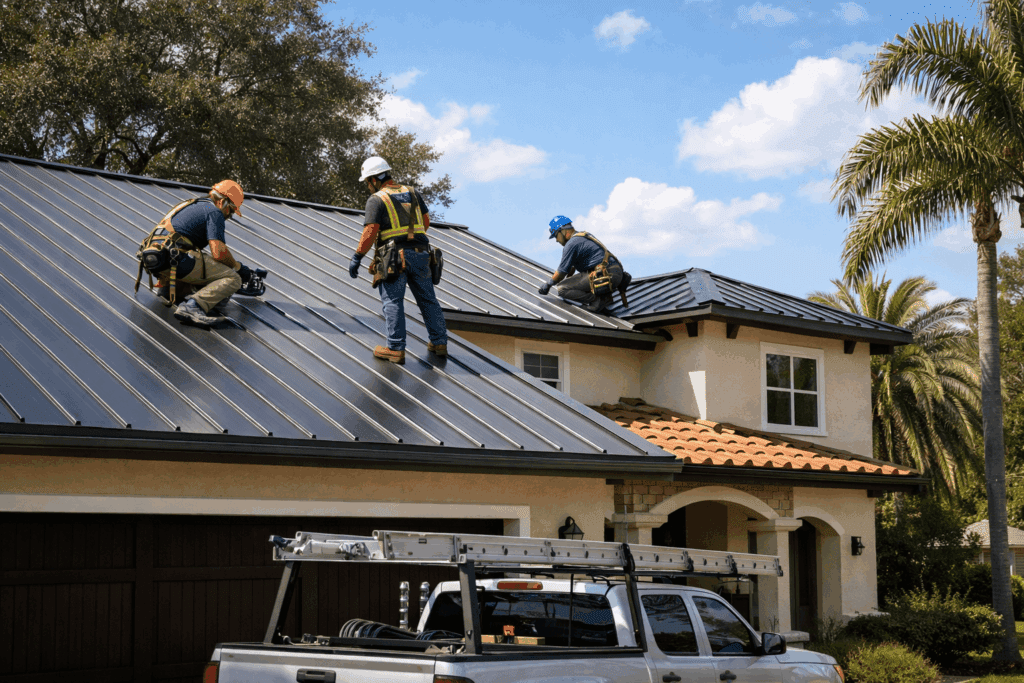
Before choosing the best roof color for Florida your home, check your HOA. Florida HOA roof color rules vary significantly by community, and violations can mean fines or a forced replacement at your cost.
In many Central Florida planned communities, HOA approved roof colors in Central Florida neighborhoods are limited to neutral, natural-looking tones from a specific manufacturer list. Some HOAs require sample board approval before work begins. Others conduct a post-installation inspection. Get written approval before your contractor orders materials.
Our team is familiar with HOA requirements across the Orlando area and can help you work through the approval process. Visit our FAQ page for answers to common questions about the roof replacement process in Central Florida.
Real-World Roof Color Ideas: Orlando, Coastal, and Suburban Homes
The best roof color for Florida looks different depending on your home style and location. Here is how color choice typically plays out across different Central Florida settings:
Coastal and waterfront homes
Weathered gray, driftwood, and soft white tones read naturally in bright marine light and fit the coastal architectural palette without looking heavy.
Orlando suburban neighborhoods
Warm tan, light gray, and medium brown tile are the dominant choices in communities around Lake Nona, Winter Garden, and Oviedo. They match stucco exteriors and hold up well over time.
Modern and flat-roof builds
TPO and modified bitumen in white or light gray are standard on low-slope roofs. These materials have built-in reflectivity that scores well on energy performance.
Craftsman or older homes with mature tree cover
Deeper slate blues, sage greens, or medium charcoals can work well here. Significant shade from mature trees helps offset heat absorption.

How to Choose the Best Roof Color for Florida: Step by Step
Start with your HOA or deed restrictions. Nothing else matters if the color is not approved. Once cleared, pull your home’s exterior paint chip or manufacturer color code so you can compare shingle and tile samples in real daylight. Narrowing down the best roof color for Florida for your specific home is easier when you are holding physical samples outside in direct sun.
Ask your roofing contractor for the Solar Reflectance Index on any product you are considering. For the best roof color for Florida performance, target an SRI of 29 or higher on low-slope roofs and 16 or higher on steep-slope roofs, in line with ENERGY STAR guidance for hot climates.
Look at what your neighbors are using too. A color that looks ideal on a sample board can feel jarring if it clashes with the surrounding streetscape. When you are ready to move forward, review our full roofing services and see how Zee’s Roofing helps Central Florida homeowners make smart, lasting decisions on materials, color, and installation.
Frequently Asked Questions
What is the best roof color for Florida heat?
The best roof color for Florida heat is a light to medium tone with a high Solar Reflectance Index. Light gray, beige, tan, and white options consistently reduce attic temperatures and cut cooling costs across the Orlando area compared to dark alternatives.
Does a lighter roof actually save money in Florida?
Yes. According to the Department of Energy, cool-colored roofing can reduce surface temperatures by up to 50 degrees Fahrenheit, which directly lowers your cooling load. In Central Florida where air conditioning runs most of the year, that savings adds up fast.
What are HOA approved roof colors in Central Florida?
HOA approved roof colors in Central Florida typically include neutral shades like tan, gray, brown, and clay from approved manufacturer lists. Requirements vary by community. Always get written HOA approval before ordering materials to avoid fines or replacement orders.
Is metal roofing a good energy-efficient option in Orlando?
Metal roofing is one of the strongest choices for roof color and energy efficiency in Florida. Light-colored or cool-certified coatings reflect heat effectively and last significantly longer than asphalt shingles in Central Florida’s heat and humidity.
How does roof color affect resale value in Florida?
Neutral, light-toned roofs hold resale value well in the Florida market. Buyers are increasingly focused on utility costs, and an energy-efficient roof is seen as a practical selling point. Bold or unusual colors can reduce your buyer pool in HOA-heavy Central Florida communities.