

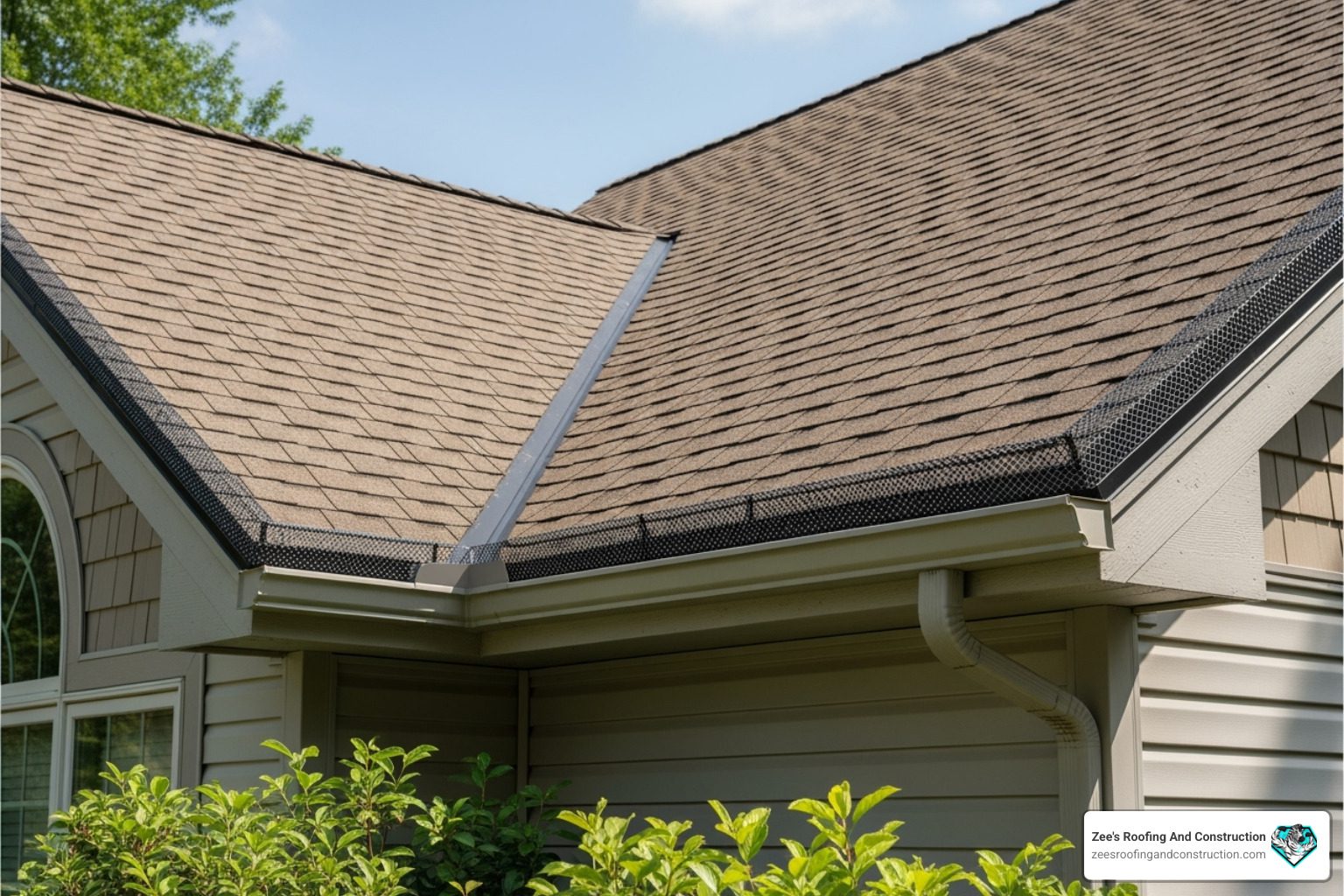
Why Gutter Guards Are Your Home’s First Line of Defense Against Water Damage
Learning how to install gutter guard systems is a straightforward DIY project that saves Central Florida homeowners money while protecting their homes from water damage. Clogged gutters are a serious threat, especially during our intense storm season. Overflowing water can damage your foundation, roof, and siding, leading to costly repairs.
Here’s a quick overview of the project:
Basic Installation Steps:
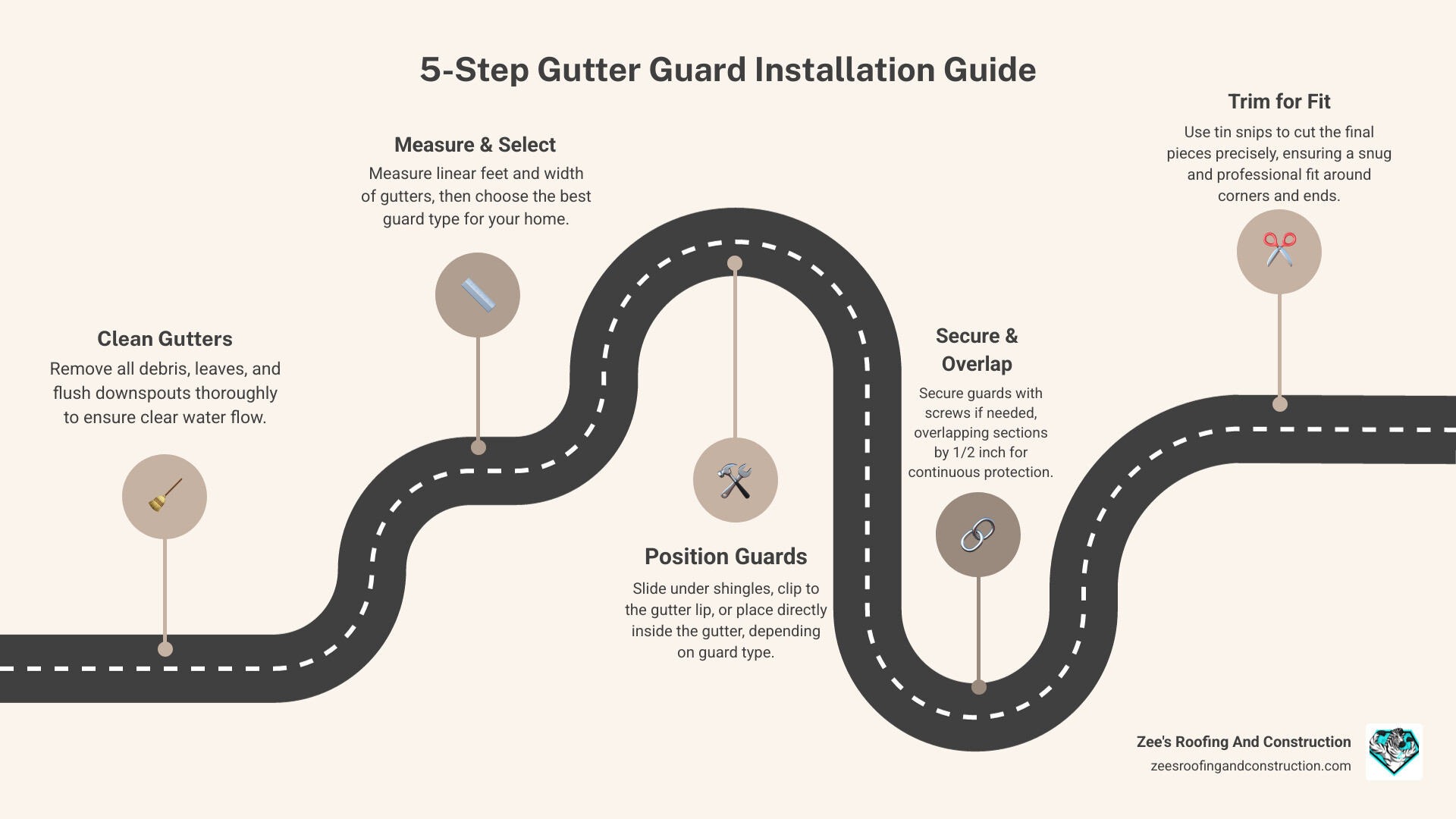
- Clean gutters thoroughly – Remove all debris and flush downspouts.
- Measure your gutters – Most homes need around 200 linear feet.
- Choose your guard type – Options include screen, mesh, foam, or brush.
- Install the guards – Slide under shingles and clip to the gutter lip, or place inside.
- Secure and overlap – Use screws if needed and overlap sections by 1/2 inch.
- Trim to fit – Cut final pieces with tin snips.
Time Required: 3-5 hours for most homes
Difficulty Level: Beginner
Cost Savings: $100-1,400+ in DIY materials vs. professional installation
Installing gutter guards is an easy home improvement project for most beginners. They keep debris out while letting rainwater flow, meaning less time on a ladder and more time enjoying your home.
I’m Mike Martinez from Zee’s Roofing & Construction. With years of experience helping Central Florida homeowners, I’ve seen how effective gutter guards are against our challenging weather. This guide will walk you through everything you need to know, whether you choose to DIY or work with professionals.
Why Install Gutter Guards? Protecting Your Biggest Investment
In Central Florida, our combination of lush trees and heavy rain makes clogged gutters a constant threat. Gutter guards are a game-changer for protecting your home, your biggest investment, from water damage.
Here are the key benefits:
Dramatically Reduced Maintenance: Gutter guards slash cleaning frequency from several times a year to perhaps once annually. This means no more dangerous trips up a ladder to scoop out soggy leaves, giving you more free time.
Clog Prevention: By blocking leaves, pine needles, and shingle grit, guards ensure water flows freely. This prevents the domino effect of problems caused by blocked gutters.
Foundation Protection: When gutters overflow, water pools around your foundation, which can lead to cracks, settling, and costly repairs. A properly functioning gutter system directs water safely away from your home, preventing foundation damage.
Roof and Siding Integrity: Water backing up in clogged gutters can seep under shingles and behind siding, causing roof rot, fascia damage, and water stains. Gutter guards prevent this backward flow of water.
Pest Deterrence: Standing water in clogged gutters is a breeding ground for mosquitoes. The damp debris also attracts rodents, birds, and insects. Guards eliminate these nesting spots.
Extended Gutter Lifespan: By keeping gutters dry and free of corrosive organic matter, guards prevent rust and help your gutter system last years longer.
Cost Savings: Professional gutter cleaning costs $100-$300 per visit. Gutter guards can pay for themselves in a few years through avoided cleaning fees alone, not to mention the thousands saved by preventing major water damage repairs.
Installing gutter guards is a smart, proactive move that protects your home’s value and provides peace of mind during Florida’s storm season.
Preparing for Installation: Types, Tools, and Gutter Prep
Proper preparation is key to a smooth installation. This involves choosing the right guard, gathering your tools, and ensuring your gutters are clean and in good repair.
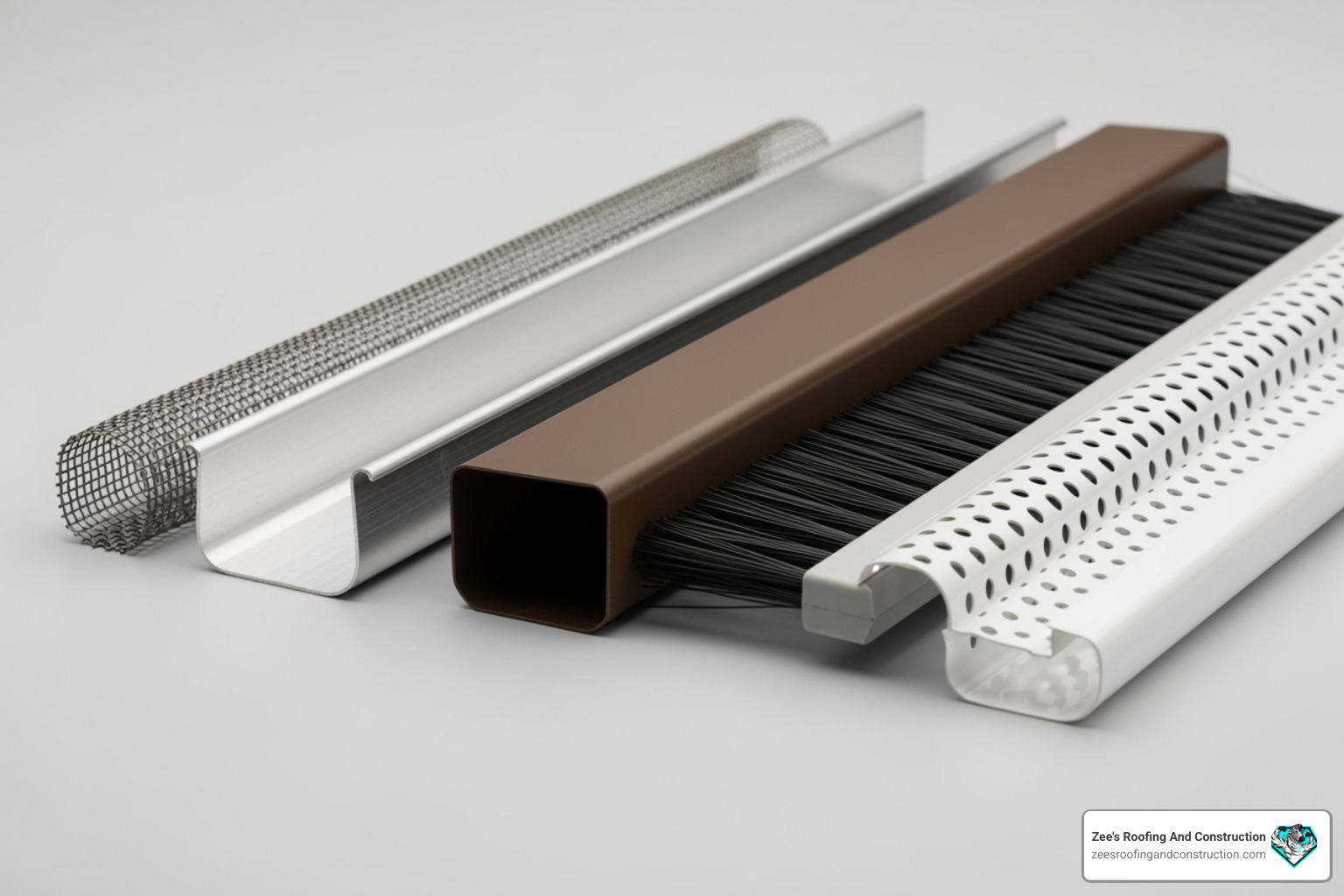
Before you buy, assess what kind of debris (large leaves, pine needles, shingle grit) your gutters collect. Also, note your roof’s pitch and measure your total gutter length—the average home has about 200 linear feet. This will help you choose the best system for your needs and budget.
Choosing Your Gutter Guard
Each type of gutter guard has pros and cons regarding cost, installation ease, and performance.
| Gutter Guard Type | Cost (per linear ft) | Ease of Installation | Debris Type Blocked | Maintenance Needs |
|---|---|---|---|---|
| Brush Guards | $1.00 – $3.00 | Easiest | Large leaves, twigs | Moderate (clean brushes) |
| Foam Guards | $2.00 – $4.00 | Easy | Leaves, seeds, some grit | Moderate (can clog internally) |
| Screen Guards | $0.50 – $1.50 | Easy to Moderate | Large leaves, twigs | Low (debris blows off) |
| Micro-Mesh | $1.50 – $4.00 | Moderate to Difficult | Fine debris, pine needles, shingle grit | Very Low (self-cleaning) |
| Reverse-Curve | $3.00 – $7.00 | Difficult (Pro recommended) | Large leaves, some fine debris | Very Low (debris slides off) |
- Brush Guards: These oversized pipe cleaners simply sit inside the gutter. They are easy to install but require periodic removal for cleaning.
- Foam Guards: Foam inserts fit snugly in the gutter, blocking most debris. They are easy to install but can degrade in the sun and may struggle with heavy rain.
- Screen Guards: A popular DIY choice, these guards slide under shingles and clip to the gutter. They are effective against leaves and larger debris.
- Micro-Mesh Guards: Offering the best protection, these fine mesh screens block even small particles like pine needles and shingle grit. They are more challenging to install but require very little maintenance. For Central Florida, micro-mesh is often the ideal choice.
- Reverse-Curve Guards: These solid covers use surface tension to direct water in while debris slides off. They are highly effective but complex to install and best left to professionals.
Tools and Materials Checklist
Gather these items before you begin:
- Safety Gear: Sturdy extension ladder (with a stabilizer), leather work gloves, and safety glasses.
- Cleaning Tools: Gutter scoop or trowel, and a garden hose with a spray nozzle.
- Installation Tools: Tape measure, tin snips, cordless drill with self-tapping screws, and a marker.
- Materials: Your chosen gutter guards (purchase 10-15% extra for cuts and corners).
Measuring and Cleaning Your Gutters
First, measure the linear feet of all your gutters and note the gutter width (usually 5 or 6 inches) to ensure you buy the correct size guards.
Next, perform a thorough cleaning—this may be the last time you have to! Remove all leaves, twigs, and sludge with a gutter scoop. Pay close attention to downspout openings to ensure they are clear. After scooping, flush the gutters and downspouts with a hose to confirm water flows freely. If water backs up, you have a clog that must be cleared.
Finally, inspect for damage like cracks, loose hangers, or rust. Make any necessary repairs before installing the guards. A healthy gutter system is essential for the guards to work effectively. For extensive damage, you may need professional Gutter Installation & Repair.
How to Install Gutter Guards: A Step-by-Step DIY Guide
Installing gutter guards is a beginner-level project most homeowners can complete in a half-day. Always prioritize safety: set your ladder on firm, level ground and consider having a helper.
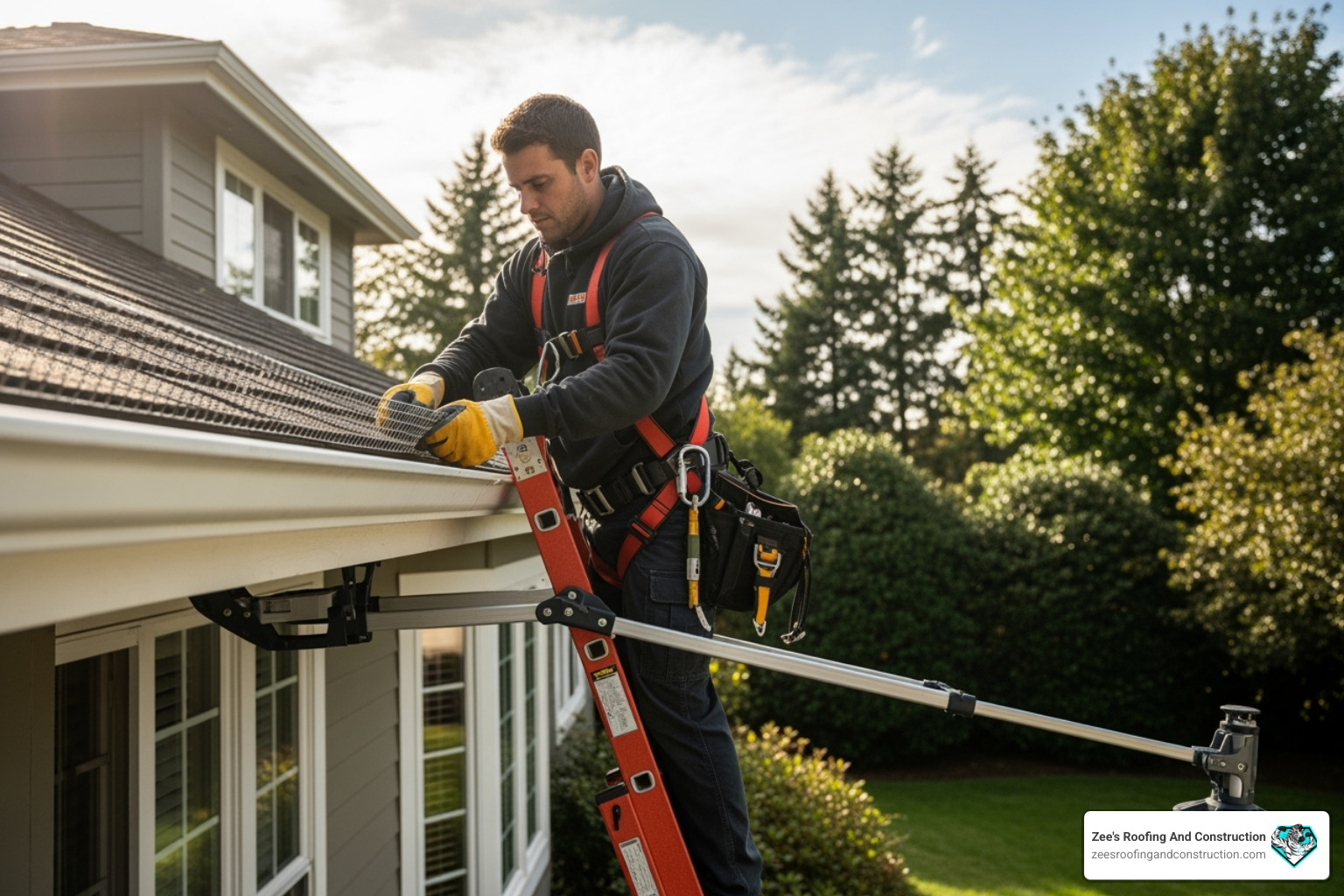
The general process for how to install gutter guard systems is to start at one end, overlap sections, and secure them firmly. Most DIY guards come in manageable 3- or 4-foot sections.
Step-by-Step: How to install gutter guard screens
Screen guards are a popular and straightforward DIY option. They create a protective cap over the gutter.
- Position the Guard: Start at a corner. Gently lift the bottom edge of your roof shingles and slide the back edge of the guard underneath. The guard should slope slightly down toward the front of the gutter.
- Snap in Place: Press the front lip of the guard down until it snaps securely onto the front edge of the gutter.
- Overlap Sections: Overlap each new section by at least half an inch over the previous one to prevent gaps.
- Secure with Screws: For extra security in high winds, drive a self-tapping screw through the guard’s front lip into the gutter every few feet.
- Cut to Fit: At the end of a run, measure the remaining space and cut the final piece to size with tin snips.
Step-by-Step: How to install gutter guard micro-mesh systems
Micro-mesh offers superior protection but requires more attention to detail. Installation varies by product, but here are the common methods.
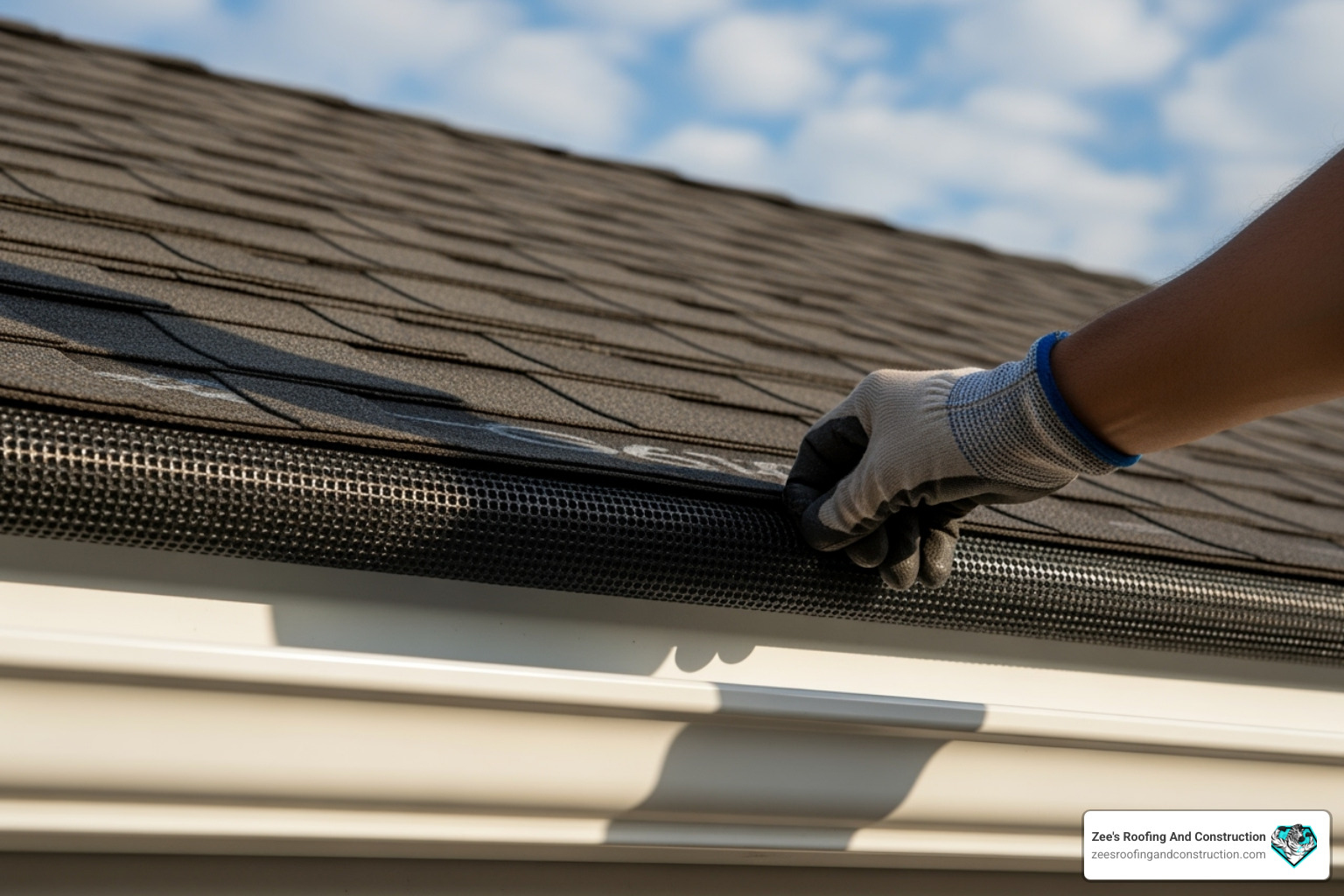
Installation Methods:
- Slide-Under-Shingles: Similar to screens, tuck the back edge under the shingles. Secure the front edge to the gutter lip using either pre-attached adhesive tape or by driving self-tapping screws every 1-2 feet.
- Fascia-Mount: Some systems attach directly to the fascia board just below the shingles. You may need to bend the back of the guard to achieve the correct angle.
Handling Corners and Ends:
- Outside Corners: Make 45-degree mitre cuts on two adjoining sections so they fit together like a picture frame. Overlap and secure with screws.
- Inside Corners: This is more complex. You can either carefully bend one section around the corner or use special corner pieces if provided. A common technique is to create a small water deflector.
- End Caps: At the end of a gutter run, trim the guard’s frame and tuck the exposed mesh down into the gutter to seal it off from pests.
Always follow the manufacturer’s specific instructions, especially regarding roof slope and joining sections.
Installing Brush and Foam Gutter Guards
For the absolute easiest installation, choose brush or foam guards. No tools are needed besides a utility knife for trimming.
- Clean Gutters: Ensure your gutters are spotless before starting.
- Place Guards: Simply lay the brush or foam sections directly inside the gutter channel, end-to-end.
- Cut to Fit: If a section is too long or needs to fit around a hanger, trim it to the correct length with a utility knife or shears.
While incredibly simple to install, remember these types require more maintenance than micro-mesh systems. Foam can degrade over time, and brushes will need to be removed and cleaned periodically.
DIY vs. Professional Installation: When to Call the Experts
While learning how to install gutter guard systems is a manageable DIY project for many, there are situations where hiring a professional is the smarter and safer choice. Consider calling an expert if you encounter any of the following:
- Safety Concerns: If you are uncomfortable with heights or spending hours on a ladder, professional installation is the safest option. Your safety is paramount.
- Steep or High Roofs: A steeply pitched roof or a two-story home significantly increases the difficulty and risk. Professionals have the safety equipment and experience for these jobs.
- Poor Gutter Condition: If your gutters are sagging, leaking, or have loose hangers, these issues must be fixed first. A professional can assess and repair your gutter system, ensuring proper pitch and function before installing guards.
- Complex Rooflines: Homes with multiple valleys, dormers, or unusual corners can make installation a frustrating puzzle. Experts have the experience to handle these tricky configurations.
- Time and Convenience: A DIY installation can take 3-5 hours or more. If you’d rather not spend your weekend on a ladder, hiring a pro saves you time and effort.
- Warranty Protection: Professional installation often comes with warranties on both the product and the workmanship, offering long-term peace of mind. At Zee’s Roofing & Construction, our commitment to craftsmanship extends to all our services, including gutter protection.
For homeowners in Central Florida, our veteran-led team ensures the job is done right the first time. If you’re weighing your options, we can provide an expert assessment with our Professional Gutter Installation services.
Frequently Asked Questions about Gutter Guard Installation
Here are answers to some of the most common questions about gutter guard installation.
What is the easiest type of gutter guard to install?
Foam and brush gutter guards are the easiest to install. They are “drop-in” solutions that require no tools other than a utility knife for trimming. You simply place the sections inside your clean gutter channel. The trade-off for this simplicity is that they don’t offer the same level of protection as micro-mesh systems and require more frequent cleaning.
How often do you need to clean gutter guards?
No gutter guard is 100% maintenance-free, but a quality system dramatically reduces the workload. While unprotected gutters need cleaning 2-4 times a year, gutters with guards typically only need an annual inspection. A quick check in spring and fall is ideal.
Maintenance is simple: most debris blows off screen and micro-mesh guards. Any remaining leaves can be swept off with a brush, and a quick rinse with a hose can clear fine pollen or grit. Instead of hours of scooping muck, you’ll spend a few minutes a year on a simple inspection.
How long does it take to install gutter guards?
For an average-sized home, a DIY gutter guard installation typically takes 3 to 5 hours. The total time depends on:
- Home Size and Complexity: Larger homes or those with complex rooflines will take longer.
- Gutter Guard Type: Brush and foam guards are the fastest to install (often under 2 hours), while micro-mesh systems take the most time due to their precise fitting requirements.
- Gutter Condition: A significant portion of the time is spent on thoroughly cleaning the gutters before installation. Heavily clogged gutters will add to the project time.
Most homeowners can complete the project in less than a day, making it an ideal weekend task.
Protect Your Home and Peace of Mind
Now that you know how to install gutter guard systems, you’re equipped to take on this valuable home improvement project. Installing gutter guards is a practical investment that reduces maintenance, prevents costly water damage to your foundation and roof, deters pests, and extends the life of your gutters. It’s a project that saves money and provides peace of mind during Central Florida’s storm season.
This guide provides the steps for a successful DIY installation. The satisfaction of protecting your home yourself is immense, and for many, it’s a manageable weekend project.
However, if you have a two-story home, a steep roof, or simply prefer an expert’s touch, our team at Zee’s Roofing & Construction is here to help. As a veteran-led company serving Sanford, Orlando, Lake Mary, and the surrounding areas, we bring integrity and craftsmanship to every job. We understand the challenges of Florida’s weather and can ensure your gutter protection system is installed perfectly.
For a complete solution, consider our professional gutter installation and repair service. We’ll assess your entire system, make necessary repairs, and install guards that will protect your home for years. Contact us today for a professional assessment and safeguard your biggest investment.