

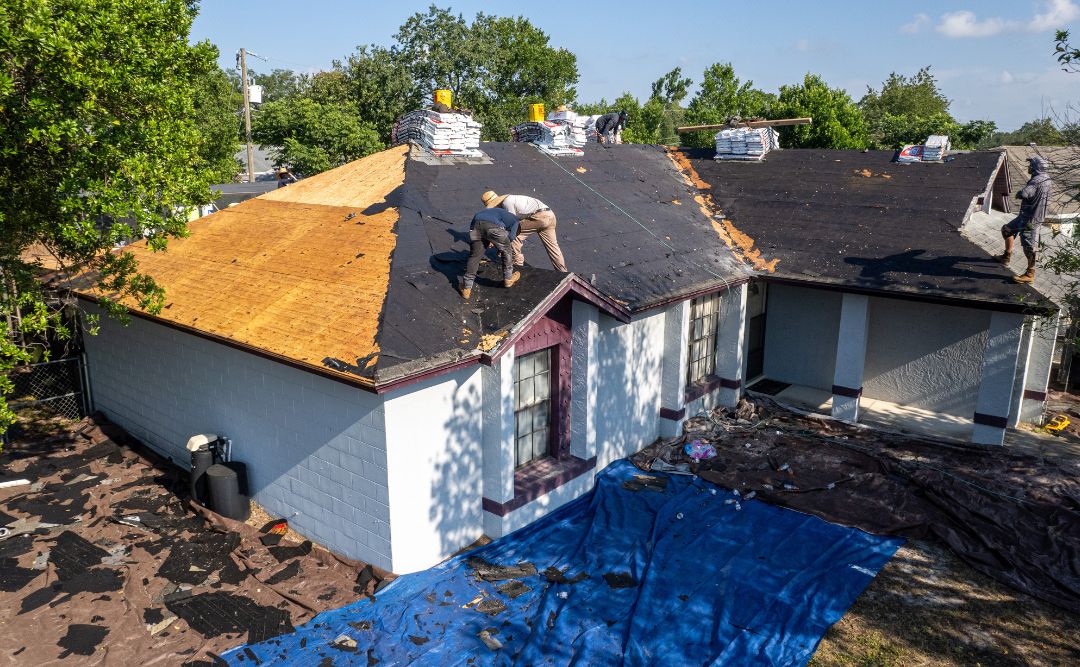
Florida Roof Insurance Coverage for Hurricane and Wind Damage
Each standard Florida homeowners policy still lists wind, hail, and hurricane-driven rain as covered perils, but only when the loss is sudden and accidental. Gradual deterioration, UV embrittlement, and small leaks that pre-date the storm fall under “wear and tear” and remain excluded.
Once the National Hurricane Center names a storm, most insurers impose a temporary moratorium that blocks new policies and coverage changes until the system dissipates. During that window, a named-storm deductible—usually one to ten percent of your dwelling limit—replaces your smaller all-perils deductible and applies once per calendar year.
Understanding this trigger helps you decide whether to file immediately or wait until the all-perils deductible resumes.
If you believe your roof has been damaged by a storm, the best first step is to contact a Florida-based roofing company for an inspection, rather than going to your insurance company first.
Filing a Roof Insurance Claim in Florida: Step-by-Step Guide
Capture and Preserve Storm Damage Evidence
Begin photographing missing shingles, punctured metal, cracked tiles, and any interior water stains as soon as conditions are safe. Be sure the images are time-stamped or geotagged so the adjuster can link the loss to a specific weather date.
Mitigate Additional Loss and Keep Receipts
Policies obligate homeowners to prevent further damage. Tarps, plywood, dehumidifiers, and wet-vac rentals qualify as reasonable mitigation; keep every receipt to submit for reimbursement.
Order a Licensed Roofing Inspection or Public Adjuster Report
A Florida-licensed roofing contractor (or public adjuster) will document creased shingles, uplifted fasteners, hail bruises, and deck deflection in a photo-rich report that translates field observations into code language used by desk adjusters. This translation often converts a partial patch into a full-roof approval.
File the Claim Quickly and Accurately
Statutes allow up to one year to report hurricane losses, but filing promptly locks in the date of loss, reduces causation disputes, and places you ahead of the inevitable post-storm backlog.
Meet the Insurance Adjuster On-Site
Invite your roofer or public adjuster to that meeting. They can point out hidden issues—underlayment tears, popped decking nails, torn flashing—while the adjuster is still onsite, preventing omissions in the original scope sheet.
Know Replacement Cost Versus Actual Cash Value
Florida law requires carriers to settle roofs younger than fifteen years on a replacement-cost basis. Older roofs default to actual-cash-value (ACV) payment unless you bought an endorsement. Review your declarations page before negotiations begin.
Submit Mandatory Documentation
Large carriers such as Citizens will not release payment until they receive a Uniform Mitigation Verification Form (OIR-B1-1802). This form verifies roof age and wind-mitigation features and stays valid for five years as long as no structural changes occur.
Appeal, Supplement, or Hire a Public Adjuster if the Settlement Is Low
Reforms enacted in 2022 curtailed one-way attorney fees and post-loss assignment of benefits, making litigation costlier. Many homeowners now hire public adjusters, who typically charge ten to twenty percent of any additional money they recover.
Florida Laws That Shape Roof Replacement Claims
The 25 Percent Rule Revision
Until 2022, replacing more than 25 percent of any roof slope triggered a code-mandated full reroof. New legislation allows contractors to upgrade only the damaged section, lowering claim totals and reducing insurer resistance.
Fifteen-Year Roof-Age Protection
Insurers may not cancel or non-renew a policy solely because a roof is under fifteen years old. For older roofs, they must accept an inspection that shows at least five years of remaining useful life before refusing renewal or switching to ACV.
Assignment-of-Benefits and Attorney-Fee Reform
Senate Bill 2-A eliminated most post-loss assignments of benefits and removed automatic plaintiff attorney-fee recovery. Thorough documentation and professional adjusting now matter more than litigation.
Named-Storm Deductibles and Carrier Moratoriums
The percentage hurricane deductible applies only when damage results from a named storm. Filing outside that window places the loss under the smaller all-perils deductible, potentially saving thousands.
Why Roof Claims Get Denied and How to Counter Them
| Common Carrier Objection | Prevention Tactic |
|---|---|
| Damage considered cosmetic only | Provide slope-by-slope photos of fractured mats or cracked tile edges plus manufacturer bulletins listing such impacts as functional failure |
| Leaks blamed on pre-existing wear | Pair time-stamped images with local weather data and moisture-meter readings that link intrusion to the recent storm |
| Roof exceeds useful life | Cite the fifteen-year protection or supply an inspector affidavit showing five or more years of remaining life |
| Alleged installation defects | Request a manufacturer field-service letter or National Roofing Contractors Association standard showing that fastening was acceptable when installed |
A denial is not the end of the process. You may request a re-inspect, submit a supplemental claim with additional evidence, or engage a public adjuster to reopen negotiations.
Financing a Roof Replacement When Insurance Falls Short
Low Monthly Payment Plans Through Zee’s Roofing
Zee’s Roofing & Construction partners with multiple lenders to offer instant soft-credit pulls, introductory zero-percent options, and fixed rates up to fifteen years. Claim proceeds and financing can be combined in a single contract. Check out the Low Monthly Payment Options for your roof replacement.
Florida PACE Roofing Loans
Property Assessed Clean Energy (PACE) programs finance hurricane-resistant roofs, self-adhered underlayments, and solar-ready decks through a property-tax assessment that runs fifteen to thirty years. Approvals rely on equity rather than FICO, payments are fixed, and the balance may transfer to the buyer when you sell—although some purchasers request payoff concessions.
Credit-Union Home-Improvement Loans
State credit unions often cap rates lower than big-bank personal loans and can fund up to ten-year terms without requiring home equity. Online approvals are quick, and hardship deferrals may apply after declared disasters.
Home-Equity Lines and Cash-Out Refinancing
When equity is strong, a HELOC or cash-out refi usually offers the lowest interest cost. Compare closing expenses and variable rates to contractor financing and PACE before committing.
Layering Grants and Tax Incentives
Florida’s My Safe Florida Home program reopens each summer with $2-for-$1 grants up to ten thousand dollars for wind-mitigation work, including roofing. The federal solar tax credit now covers PV-ready underlayment and attachment hardware, letting homeowners stack incentives.
Florida Roof Insurance and Financing FAQ
How soon must I file a hurricane roof claim?
Statute allows one year, but filing within days secures the date of loss and reduces causation disputes.
What proof of roof age will insurers accept?
Building permits, paid invoices, warranty registrations, or a notarized contractor affidavit satisfy most carriers.
Can my insurer non-renew me for multiple roof claims?
Yes. Two paid losses in five years can trigger non-renewal, but the carrier must give at least forty-five days’ written notice and cannot cancel mid-term without fraud.
Does PACE financing complicate resale?
The unpaid assessment shows on the tax bill. Some lenders or buyers ask for payoff at closing, so plan with your realtor.
Is hiring a public adjuster worth the fee?
When an initial offer is far below legitimate repair estimates, a public adjuster’s contingent fee often pays for itself by uncovering overlooked damage and securing a higher settlement.
Key Takeaways for Florida Homeowners
Wind and hail losses that meet Florida’s definitions, supported by clear, time-stamped proof and a professional inspection, remain the surest path to a carrier-funded roof replacement. Knowing the revised 25 percent rule, roof-age protections, and new limits on attorney fees arms you for negotiations. If insurance still falls short, contractor financing, PACE assessments, credit-union loans, and home-equity products deliver affordable monthly payments so you can restore a hurricane-ready roof without draining savings.
Sources
– Florida homeowners insurance moratoriums and named-storm deductible rules Investopedia
– Insurers halt policy binding when a storm is named Title Giant, Inc.
– Florida Roof Statute 2025 overview: 15-year rule and 25 percent rule Florida Roofing and Gutters
– 25 percent roof replacement changes and 2025 updates Williams Law
– Licensed roofing contractor recognized as authorized roof inspector (2024 bill summary) The Florida Senate
– Property insurance changes and roofing contract notice requirements (DFS) FLDFS
– My Safe Florida Home grant reopening announcement (July 2025) Florida Realtors
– Florida PACE program overview and homeowner testimonials Florida PACE Funding Agency
– Typical PACE interest rates and payment structure (2025 guide) usahomeimprovement.com