

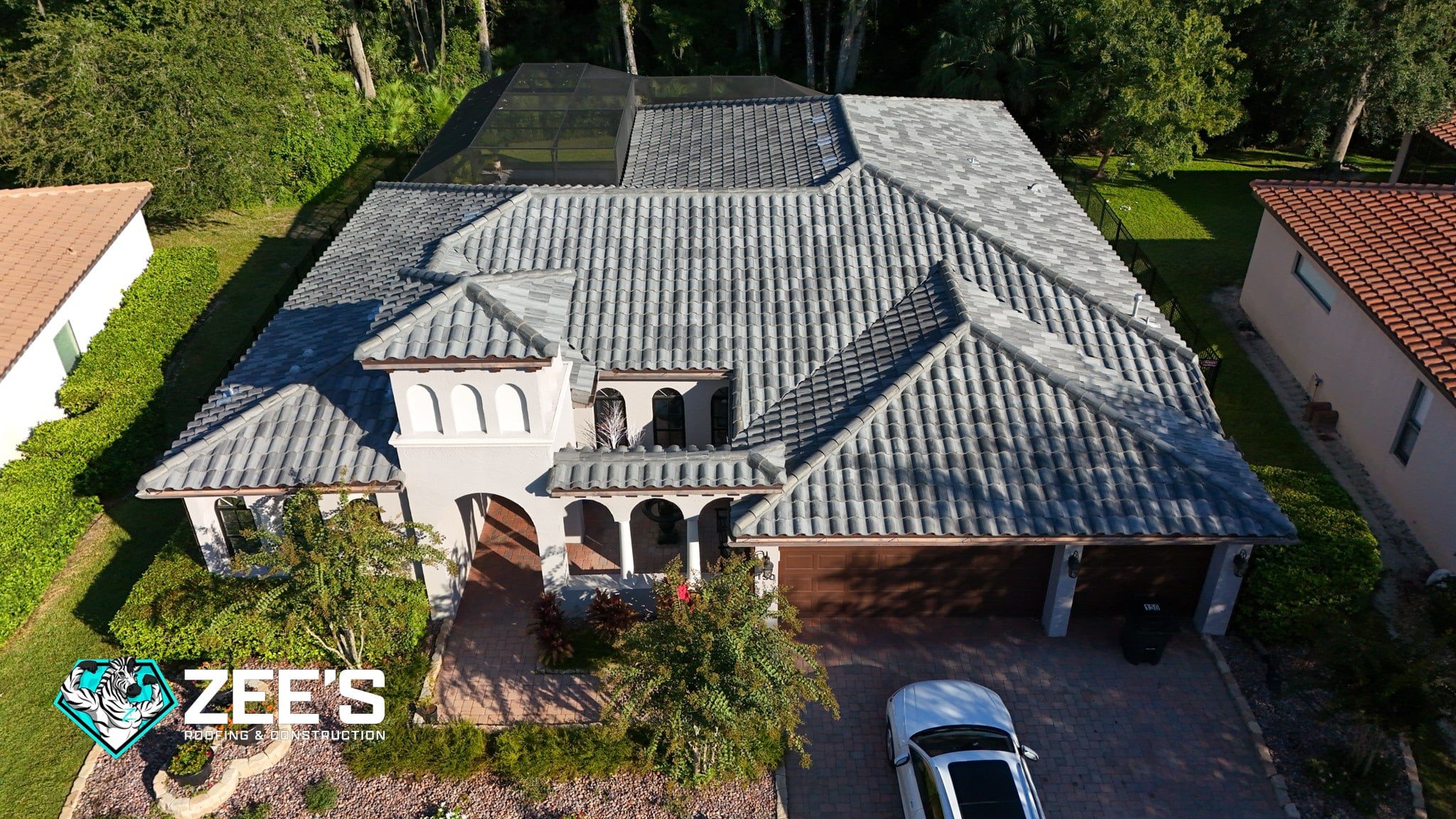
Cooler fall nights are when you hear it first. A scratch above the guest room. A thump near the garage ceiling. Then a faint chirp at dawn that was not there in August. In a lot of Sanford homes, the critter did not chew through shingles. It worked the roof edge.
We see it after storm season when the roof has flexed, the fascia has taken a few hard rains, and the soffit panels have a little give. One loose vented soffit strip, a lifted drip edge corner, a ridge vent end that was never blocked off, that is all it takes for a rat, squirrel, or a family of bats to start using the attic.
The tricky part is you cannot “patch a hole” and call it done. The roof edge has to stay waterproof, and the attic still has to breathe. Done wrong, you stop the animal and create a leak or a condensation problem.
Why fall is prime time for soffit and roof-edge intrusions
Fall is the changeover. Daytime heat still bakes the roof deck, nights cool off, and that daily expansion and contraction works fasteners loose in the edge details. Aluminum fascia covers can oil-can, soffit panels can unclip, and that little gap at the frieze board becomes a doorway.
Wildlife also shifts behavior now. As temperatures dip into the 60s at night, animals start looking for dry shelter that holds warmth. Attics do that. If a home has a bath fan duct that ends near the soffit, the warm, moist air can leave a scent trail right at the eave line.
Common entry spots we find in fall:
- Vented vinyl or aluminum soffit panels that have dropped 1/2 inch at a corner
- Fascia returns at the gable where the trim meets the roof edge
- Ridge vent ends where the manufacturer’s end plugs were skipped
The failure mode is almost always the same. The opening starts small, then the animal enlarges it by clawing and pushing. If you wait a month, the insulation gets matted down and the roof edge wood starts to stain.
Soffit panels fail in predictable ways, and the fix has to lock them back down
Most soffit systems rely on a J-channel or F-channel and the panel’s own stiffness. Once one panel is bowed or unseated, wind can flutter it. That flutter loosens the next panel. Then you get a run of panels you can flex by hand.
We do not “screw through the face” as a first move. That cracks vinyl and it telegraphs through aluminum. The proper repair is to reset the channel, replace any broken sections, and re-seat the panels so they are fully captured on both sides.
If we need mechanical fastening, we use corrosion-resistant screws and place them where the system is designed to take them, typically into solid backing, not into the thin edge of the panel. On older homes with soft or rotted sub-fascia, we replace the affected wood, usually 1×6 or 1×8, so the soffit has something firm to bite into.
For vented soffit, the airflow matters. We keep the vent area continuous, and we add pest-resistant screening where it belongs, behind the vent strip, not stuffed in the opening where it blocks intake.
Fascia, drip edge, and the eave line are where water and animals meet
The eave is a stack-up. Shingles on top, underlayment, drip edge, then fascia and soffit below. Critters exploit any place that stack-up is loose, but our repair has to respect water flow.
A common one is a drip edge that was nailed too high, or nailed with wide spacing. In wind-driven rain, water can wick behind it, swell the fascia, and open a gap. Once the fascia edge softens, animals can tear it.
Roofing-specific steps that hold up:
- Verify drip edge is metal L-style at the eave, lapped correctly, and fastened tight (we look for fasteners about every 8 to 10 inches, not 18 inches apart)
- Replace stained or punky fascia wood, not just cover it with new aluminum
- Reinstall starter strip and first course so the shingle overhang is consistent (about 3/8 inch is typical), too short leaves the edge exposed
If the home has gutters, we check the gutter hanger spacing and the fascia behind them. Loose gutters lever against fascia in heavy rains. That movement opens the same gaps animals use.
Ridge vent ends and roof-to-wall corners are quiet entry points
Not every attic intruder comes in at the eave. Ridge vents are another spot, especially at the ends. A lot of ridge vent products require end plugs or an end baffle. If those pieces are missing, you can end up with a 1 inch to 2 inch open slot at the ridge.
Animals like it because it is high, dry, and out of sight. You will not see it from the driveway unless you get the right angle. You hear activity near the peak at night, then you see insulation pulled up later.
Roof-to-wall corners matter too. Anywhere a lower roof meets a vertical wall, step flashing and counterflashing need to be tight. If siding is cut too high, you can get a gap above step flashing that leads straight into the attic chase.
Our approach is to keep ventilation working while closing access:
- Install the manufacturer’s ridge vent end caps, then shingle over per spec
- Use metal mesh or formed blocking only where it does not choke exhaust
- Rework step flashing so it is layered correctly, each piece lapped with the shingle course
We are always thinking about water first, then air, then pests.
Don’t seal the attic tight, balance intake and exhaust while blocking pests
Homeowners sometimes reach for canned foam. Foam is fine in the right place, but at the roof edge it often causes two problems. It blocks soffit intake, and it traps moisture against wood.
A healthy attic in fall should move air. In Florida, that means you need clear intake at the soffits and clear exhaust at the ridge or roof vents. If you block intake, the attic can pull air from the house instead. That brings in conditioned air, raises humidity in the attic, and you can end up with damp roof decking after a cool night.
We look for baffles at every rafter bay. Those are the foam or cardboard chutes that keep insulation from packing tight to the roof deck. A typical baffle is sized to maintain an air channel of about 1 inch to 2 inches above the insulation. If the baffles are missing, we add them so the soffit can breathe without letting critters nest right at the edge.
For screening, we use corrosion-resistant mesh. Not window screen. Squirrels and rats shred that. The goal is a barrier that still allows air movement and does not rust out in a year.
What we check inside the attic after an intrusion, stains, wiring, and insulation
If an animal has been in the attic for more than a few nights, there is usually evidence. Compressed insulation, dark rub marks on truss webs, droppings near the entry point. We take that seriously because it ties back to roof performance.
Wet or matted insulation stops insulating. It also holds moisture against the ceiling drywall. If the roof deck has been chewed or scratched, you can get exposed wood fibers that wick moisture faster.
Inside, we check:
- Roof decking around the eave and ridge for staining, delamination, or soft spots (OSB can swell and flake after repeated wetting)
- Electrical wiring for chew marks, especially on older NM cable runs near soffit lines
- Bath fan ducts to confirm they terminate outside with a proper hood and damper, not dumping into the attic
If we find staining at the roof edge, we trace it back to the exterior detail. A stain line that runs along the fascia is often a drip edge or gutter issue, not a “mystery roof leak.”
Where cleanup and restoration are needed, we handle that as part of the construction restoration scope, but we still fix the roof edge first. Otherwise you are cleaning up a problem that will come right back.
The repair that lasts is a system repair, edge details, fasteners, and maintenance
Critter damage roof repair in Sanford FL is not a single trade fix. The animal entry is usually carpentry plus roofing plus ventilation. If you only do one piece, the weak spot moves two feet down the line.
A lasting repair usually includes replacing any compromised wood, resetting the soffit and fascia so it is tight, and rebuilding the roof edge layers in the right order. We use roofing nails where roofing nails belong, and we do not mix in random fasteners that rust out. For edge metal, we use prefinished aluminum or galvanized steel drip edge matched to the roof, and we lap it correctly at corners so water cannot get behind it.
Then we talk maintenance. Fall is a good time to do it because you can still work comfortably in the attic and on the roof, and you are heading into the stretch where cold snaps and wind-driven rains show up.
On our yearly maintenance program we focus on the repeat offenders:
- Loose soffit panels at corners and porch returns that you can flex by hand
- Ridge vent ends and any roof penetrations with aging rubber boots
- Gutters and downspouts that are pulling on fascia
If you want one goal before winter, it is this: keep the roof edge tight, dry, and breathing.
Key Takeaways
- Most attic wildlife entries start at a soffit panel gap or a fascia return, not through shingles.
- Ridge vent ends can leave a 1 inch to 2 inch slot if end caps or baffles were skipped.
- Drip edge fastened tight (often every 8 to 10 inches) helps stop water that rots fascia and opens gaps.
- Don’t block soffit intake with foam, keep a 1 inch to 2 inches air channel with baffles at rafter bays.
- Window screen is not pest control, use corrosion-resistant mesh that animals cannot shred.
Conclusion
If you are hearing activity in the attic this fall, treat it like a roof edge problem until proven otherwise. The soffit, fascia, drip edge, and vent terminations all have to work together. Shut one gap the wrong way and you trade a critter for a moisture issue, then you are dealing with stained decking and soft wood at the eaves.
We handle these as a roof system repair, not a quick patch. We close the access points, rebuild the edge details so water sheds the way it should, and keep the attic ventilation doing its job. If you are in Sanford FL and you want us to take a look, we will trace the entry, show you the failure point, and lay out the repair steps that keep it tight going into winter.
References
