

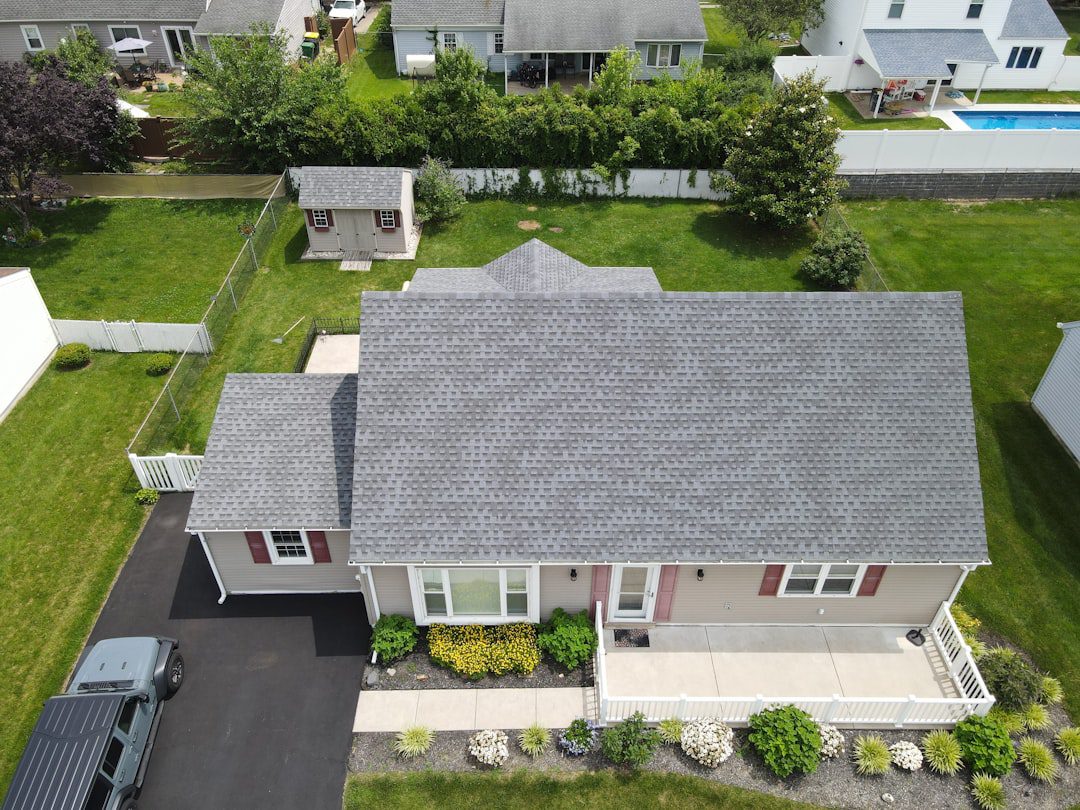
Understanding Fire Safety for Your Florida Roof
Are asphalt roofs flammable? This is a critical question for Central Florida homeowners. The short answer: while asphalt is a petroleum-based material and technically combustible, most modern asphalt shingles are highly fire-resistant and rated Class A, the highest fire rating available.
Here’s what you need to know:
- Class A asphalt shingles provide maximum fire resistance against severe fire exposure.
- Fiberglass-based shingles are significantly more fire-resistant than older organic-mat shingles.
- Fire resistance depends on the entire roofing system, including underlayment and installation quality.
- A Class A rating means the roof resists external fire sources like embers, giving firefighters critical response time.
Your roof is your home’s first line of defense against fire hazards like wildfire embers and lightning strikes. Understanding how asphalt shingles perform helps you protect your property and family.
As Mike Martinez of Zee’s Roofing & Construction, I’ve seen how proper material selection and installation directly impact fire safety. My team combines military-grade discipline with deep roofing expertise to ensure every installation meets the highest safety standards.
Understanding Asphalt Shingle Composition and Fire Resistance
If you’ve ever wondered are asphalt roofs flammable, the answer lies in how modern asphalt shingles are made. While raw asphalt is combustible, the shingles on your roof are sophisticated, multi-layered systems engineered to resist fire.
At the foundation of a quality asphalt shingle is a fiberglass mat, the structural backbone. This mat is saturated with specially formulated asphalt containing fire-retardant additives that reduce flammability. Finally, a protective layer of ceramic granules is embedded into the surface. These granules do more than add color; they shield the asphalt from UV radiation, deflect heat, and create a fire-resistant barrier against flames and embers.
This careful engineering is how manufacturers achieve the high fire ratings you see on shingle packaging. The process transforms raw materials into a roofing system that meets rigorous fire safety standards. For a deeper dive into testing, check out Understanding Fire Resistance in Asphalt Shingles.
What Makes Modern Asphalt Shingles Fire-Resistant?
The fire resistance of today’s asphalt shingles is the result of decades of engineering. The fiberglass core is key; unlike older, flammable organic-mat shingles made from wood pulp, fiberglass is inherently non-combustible. It acts as a barrier, stopping flames from penetrating your roof deck.
The protective granule layer is the first line of defense against external flames and embers. When a spark lands on your roof, it hits these non-combustible minerals first, not the asphalt underneath.
During manufacturing, the asphalt is treated with fire-retardant chemicals. These additives inhibit flame spread at a molecular level, even though the base material is petroleum-based.
If your home has older organic-mat shingles, they likely have a low fire rating (Class B or C) and are much more vulnerable to ignition. The difference between organic and fiberglass shingles is substantial for fire safety. A professional roof inspection can tell you which type you have and whether an upgrade is needed for better protection.
At Zee’s Roofing & Construction, we know the right materials make all the difference. When asking are asphalt roofs flammable, modern fiberglass asphalt shingles with Class A ratings are among the most fire-resistant residential roofing options available.
Decoding Roof Fire Ratings: Class A, B, and C Explained
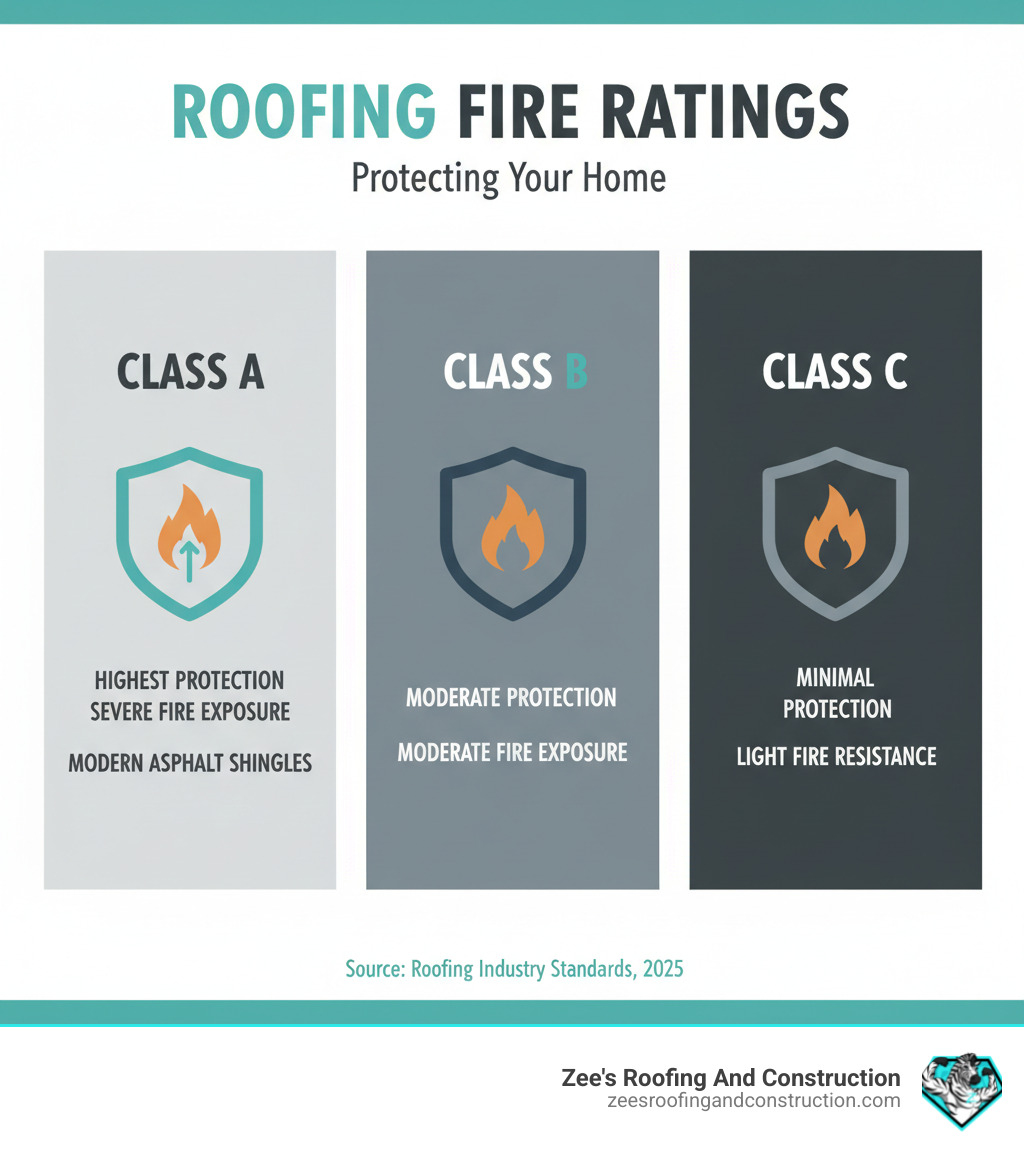
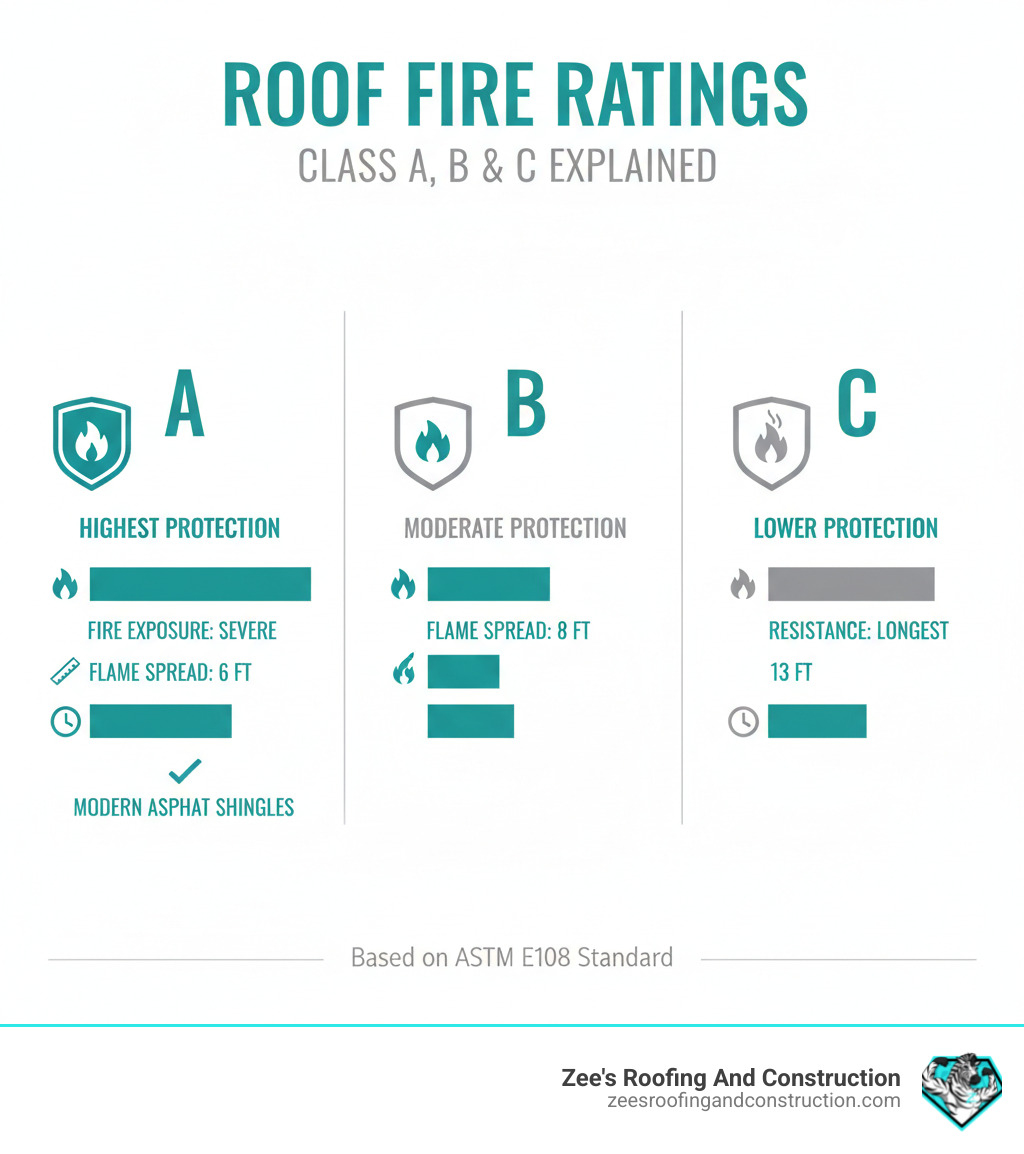
When you ask are asphalt roofs flammable, fire ratings provide the answer. Organizations like Underwriters Laboratories (UL) use the ASTM E108 test to simulate real-world fire scenarios, like burning embers and spreading flames. Based on performance, materials are assigned one of three ratings:
Class A: The highest level of fire protection. These materials withstand severe fire exposure, with a maximum flame spread of 6 feet. Most modern asphalt shingles are Class A.
Class B: Moderate protection. These materials resist moderate fire exposure but can ignite under intense or prolonged conditions. They allow a flame spread of up to 8 feet.
Class C: The minimum level of fire resistance. These materials offer only light protection and are more likely to ignite in a serious fire. They allow a flame spread of up to 13 feet.
Why Class A is the Gold Standard for Residential Roofing
For your Central Florida home, Class A fire-rated roofing is the gold standard for several reasons:
Maximum Protection: Class A shingles have passed the most severe fire tests. They resist ignition from external sources like embers and prevent flames from spreading, even under extreme conditions. While no material is truly “fireproof,” Class A is the closest you can get in residential roofing.
Peace of Mind: Knowing your roof has the highest fire rating available provides invaluable peace of mind that you have the best protection for your family.
Insurance Savings: Many insurance companies offer better rates for homes with Class A roofing because they recognize the reduced risk. Some insurers in high-risk areas even require it.
Building Code Compliance: Modern building codes, especially in wildfire-prone regions, often mandate Class A roofing for new construction and roof replacements. Choosing Class A ensures your home is up to code.
At Zee’s Roofing & Construction, we always recommend Class A asphalt shingles. It’s not just about checking a box—it’s about providing the level of protection we’d want for our own families. When you’re asking are asphalt roofs flammable, the answer is far more reassuring with Class A materials.
So, Are asphalt roofs flammable? Factors That Influence Risk
The question “are asphalt roofs flammable?” is complex. While modern asphalt shingles are fire-resistant, a roof’s actual vulnerability depends on several interconnected factors beyond the material itself. Material composition, installation quality, roof age, maintenance, and debris accumulation all play crucial roles.
Even the best shingles won’t perform as intended if they’re poorly installed or maintained. To understand the importance of proper technique, you can learn more about how to install roof shingles.
How Material and Age Impact Flammability
Your shingle type and its age dramatically affect fire vulnerability. As discussed, modern fiberglass shingles have a non-combustible core and typically earn a Class A rating. Older organic shingles use a flammable paper or wood fiber base, usually resulting in a Class C rating and higher risk.
Even with fiberglass shingles, aging takes a toll. Over time, shingles can curl and crack, creating openings where embers can lodge and ignite the underlying roof deck. Granule loss is another concern. As the protective ceramic granules wear away, the asphalt layer becomes exposed and more vulnerable to direct flame, increasing risk.
Why Installation and Maintenance are Critical for Fire Safety
Even Class A shingles can fail if not installed or maintained correctly. A fire-safe roof is a complete system.
- Professional Installation: An experienced roofer ensures every component is correctly installed, preventing gaps where fire or embers could penetrate. At Zee’s Roofing & Construction, we bring military-grade precision to every job because the details matter for your family’s safety.
- Underlayment Choice: A fire-rated synthetic underlayment adds another layer of defense beneath the shingles, protecting your roof deck.
- Regular Inspections: Annual check-ups help identify and fix problems like damaged shingles or debris buildup before they become fire hazards.
- Clean Gutters and Roof: Gutters filled with leaves and pine needles are a perfect fuel source for embers. Keeping your gutters and roof surface clear of combustible debris is a simple but critical fire prevention step.
Are asphalt roofs flammable when other factors are at play?
Your roof doesn’t exist in a vacuum. Other features and environmental factors impact its fire vulnerability.
- Roof Features: Skylights, vents, and chimneys can be entry points for embers if not properly sealed and maintained. Debris often collects around them, increasing risk. A chimney should have a spark arrestor to prevent hot embers from landing on the roof.
- Solar Panels: While not highly flammable, the space under solar panels can trap embers. Ensure they are installed with fire-rated mounting brackets and that the wiring is sound.
- Overhanging Vegetation: Trees dropping leaves and branches onto your roof create a fuel source. Trimming branches back from your home creates a defensible space, a key strategy in home hardening. Learn more at Ready for Wildfire.
- Wildfire Embers: Embers can travel miles ahead of a wildfire, landing on roofs and igniting any available fuel. A Class A-rated roof on a clean, well-maintained surface is your best defense against this airborne threat.
Proactive Steps to Improve Your Roof’s Fire Safety
Proactive fire safety is about having a plan. The good news is that most prevention steps are straightforward and manageable.
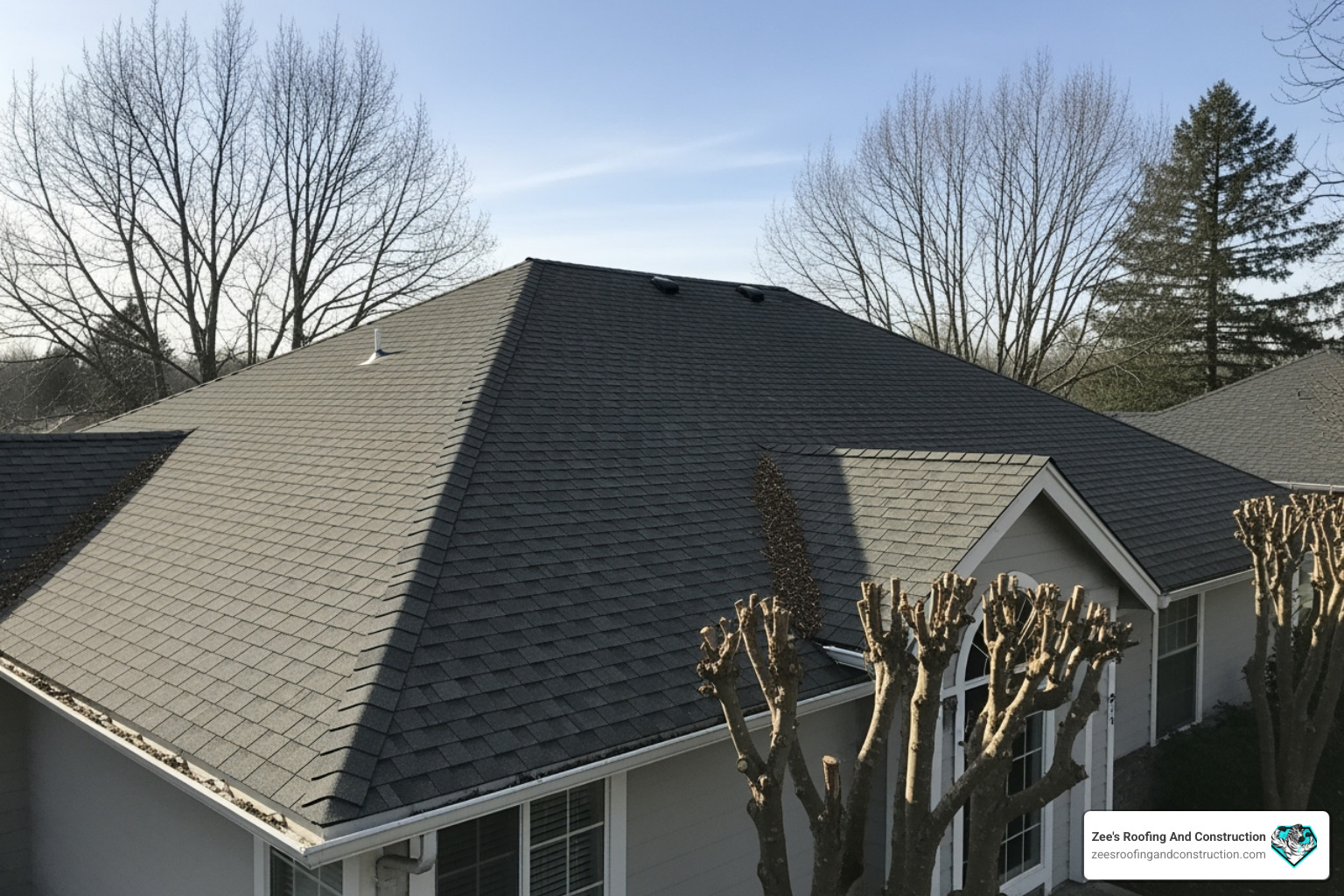
Fire safety is a system. It starts with choosing Class A fire-rated shingles for any roof replacement. This is the foundation of your home’s fire defense. From there, focus on maintenance:
- Keep your roof and gutters clean. A debris-free surface removes the fuel that embers need to start a fire.
- Schedule regular professional inspections. At least once a year, have a professional check for damaged shingles, exposed underlayment, or other vulnerabilities.
- Trim overhanging branches. Maintain at least 10 feet of clearance between trees and your roof to prevent debris accumulation and stop flames from spreading.
- Install a spark arrestor on your chimney to prevent hot embers from escaping.
- Discuss fire-resistant underlayment with your contractor during a roof replacement for an added layer of protection.
These home hardening strategies are essential for fire safety. You can find more tips at Ready for Wildfire.
Common Causes of Roof Fires and How to Prevent Them
Understanding common causes helps focus your prevention efforts:
- Wildfire Embers: These glowing fragments can travel for miles. Your defense is a Class A roof, clean surfaces, and clear gutters. With no fuel, embers burn out harmlessly.
- Lightning Strikes: A real concern in Central Florida. A properly installed Class A roof minimizes fire risk if struck.
- Chimney Sparks: Creosote buildup is a fire hazard. Annual chimney cleaning and a spark arrestor are essential prevention.
- Faulty Wiring: Electrical issues in attics or with rooftop equipment like solar panels can cause fires. Ensure all work is done by qualified professionals.
- Fireworks: Stray fireworks can ignite debris on a roof. Keep your roof clean year-round.
Upgrading to the Most Fire-Resistant Asphalt Roofing Options
A roof replacement is a golden opportunity to upgrade your home’s fire safety. The question are asphalt roofs flammable becomes less concerning when you choose the right system.
Start with Class A asphalt shingles. They provide the highest level of fire resistance available. Pair them with a fire-resistant underlayment to create a robust, layered defense system.
However, these materials only perform as designed if installed correctly. Professional installation is critical to ensure every component works together to protect your home. Our team at Zee’s Roofing & Construction brings military-grade attention to detail to every installation, because your family’s safety depends on it.
Asphalt shingles also offer other benefits for Florida homes, including cost-effectiveness and resistance to wind and UV exposure. Learn more about Why Choose Asphalt Shingles for Your Florida Roof?
Investing in a quality, professionally installed roof system isn’t just about protecting property—it’s about buying peace of mind.
Frequently Asked Questions about Asphalt Roof Flammability
Over the years, I’ve addressed many common homeowner concerns about roof fire safety. Here are answers to the most frequent questions.
Can a Class A-rated asphalt roof still catch on fire?
This is a critical distinction: a Class A-rated roof is fire-resistant, not “fireproof.” No material is completely immune to fire under all possible circumstances.
A Class A rating means your roof has passed rigorous testing, proving it can resist ignition and dramatically slow the spread of flames from external sources like wildfire embers or chimney sparks. This is a powerful defense for your home.
However, under extreme conditions—such as prolonged, direct flame contact from a neighboring house fire or a massive buildup of combustible debris—even a Class A roof could eventually ignite.
The true value of a Class A roof is that it buys you precious time. It provides time for firefighters to respond and for your family to evacuate safely, which can be the difference between minor damage and a total loss.
How do I know what fire rating my current roof has?
There are a few ways to find this information. Start with any manufacturer specifications or installer documentation from your last roof installation, as these documents often list the fire rating.
If you can’t find any paperwork, the most reliable method is to schedule a professional roof inspection. An experienced roofer from our team at Zee’s Roofing & Construction can examine your shingles to identify their type and likely fire rating. We can also assess your roof’s overall condition and point out any factors that might compromise its fire safety, such as age or granule loss.
Does the color of an asphalt shingle affect its fire resistance?
No, the color of an asphalt shingle does not affect its fire resistance rating. The rating is based entirely on the shingle’s composition—the fiberglass mat, fire-retardant asphalt, and protective granules—not the pigment that gives it color.
However, color does impact energy efficiency. Darker roofs absorb more solar heat, which can increase cooling costs in Central Florida. Lighter-colored “cool roof” shingles reflect more sunlight, keeping your home cooler. This is a matter of heat absorption vs. flammability; it’s about energy bills, not fire risk.
My recommendation is to always choose Class A fire-rated shingles for safety. Then, within that category, select a color that suits your home’s style and your energy efficiency goals.
Your First Line of Defense: A Professionally Installed, Fire-Resistant Roof
So, are asphalt roofs flammable? The truth is that while raw asphalt is combustible, modern Class A fire-rated asphalt shingles are engineered to be highly fire-resistant, providing robust defense against external fire sources like wildfire embers and sparks.
However, fire safety is a complete system. It includes the shingles, the underlayment, the quality of the installation, and ongoing maintenance. Even the best materials can be compromised by age, debris, or poor installation. Keeping your roof and gutters clean, trimming trees, and scheduling annual inspections are all crucial parts of maintaining the fire-resistant barrier that protects your home.
In Central Florida, risks from lightning and other sources are real, and your roof is your first line of defense.
At Zee’s Roofing & Construction, our veteran-led team creates comprehensive roofing systems designed for maximum safety and durability. We use only high-quality, Class A fire-rated materials and apply military-grade precision to every installation because we believe your family deserves the best protection available.
Ready to ensure your home has the fire-resistant protection it deserves? Contact us today for expert asphalt roofing services backed by our lifetime warranty on full roof replacements. Your home’s safety is our mission.