

Why Finding the Right Roofing Partner Matters in Windermere
Windermere roofing contractors face unique challenges in Central Florida’s demanding climate, and your choice of contractor can make or break your home’s protection for decades to come. Between intense UV exposure, hurricane-force winds, and year-round humidity, your roof takes a beating that few other regions can match. Choosing a local, reputable expert who understands these specific threats is the single most important decision you’ll make for the longevity and safety of your home.
Your roof isn’t just about keeping the rain out—it’s your home’s first and most critical line of defense against storms that can pack winds well over 100 mph. The peace of mind that comes from knowing your roof was installed with precision and care by a team you can trust is invaluable, especially as hurricane season approaches.
When considering materials, it’s crucial to understand their performance in our climate. The research shows that tile roofs can last 50+ years when properly installed and maintained, making them a fantastic long-term investment. Asphalt shingles typically last 15-30 years in Florida, with architectural shingles offering better durability than basic 3-tab options. For ultimate hurricane resistance and longevity, metal roofing stands out as the most durable and energy-efficient choice, often lasting over 50 years.
Finding the right contractor goes beyond a simple price comparison. It’s about finding a true partner for your home’s protection. Here’s what to look for:
A Valid Florida Contractor License: Never hire a roofer without a state-issued license. For roofing, this is typically a Certified Roofing Contractor license with a “CCC” prefix. You can and should verify any contractor’s license on the Florida Department of Business and Professional Regulation (DBPR) website. A valid license ensures they have met the state’s stringent requirements for experience, competency, and financial stability.
Comprehensive Insurance Coverage: A legitimate contractor will carry both General Liability insurance and Worker’s Compensation insurance. General Liability protects your property from damage during the project, while Worker’s Comp protects you from being held liable if one of their employees is injured on your property. Ask for a certificate of insurance and verify it with the issuing agency.
Deep Local Experience: A contractor based in another state won’t understand Windermere’s specific building codes, wind mitigation requirements, or the best materials to combat our humidity and sun. Look for a company with a proven track record in Central Florida that can point to completed projects in your area.
Strong Customer Reviews and References: Go beyond the star rating. Read recent reviews on multiple platforms and look for details about the contractor’s communication, professionalism, and cleanup process. A top-tier contractor will also be happy to provide you with a list of local references you can speak with directly.
Clear, Detailed Warranties: You should receive two types of warranties: one from the material manufacturer and one from the contractor covering the workmanship. A workmanship warranty is a sign of the contractor’s confidence in their own installation quality. Some elite contractors even offer a lifetime warranty on their work, providing the ultimate long-term protection.
I’m Mike Martinez, and my team at Zee’s Roofing & Construction brings military-trained attention to detail to every roofing project we handle for homeowners in Windermere and throughout Central Florida. Our veteran-led approach means we treat your home’s protection with the same discipline and integrity we learned in service, ensuring no detail is overlooked. We are proud to be the Windermere roofing contractors our community trusts.
Your Roof vs. the Windermere Climate: What Homeowners Need to Know
Living in beautiful Windermere means enjoying sunny lakeside views and warm Florida weather year-round. But this paradise comes with some serious challenges for your roof. Our Central Florida climate isn’t just about perfect beach days—it’s a constant battle against a triple threat: intense UV rays, relentless humidity, and the annual hurricane season.
These weather conditions don’t just wear down your roof gradually. They actively accelerate the aging process. The blazing Florida sun beats down on your roof, causing a phenomenon called thermal shock as materials expand in the heat and contract during our frequent afternoon thunderstorms. This cycle causes materials to crack, warp, and lose their protective qualities far faster than in milder climates. Meanwhile, our year-round humidity creates the perfect breeding ground for algae and mold, which can literally eat away at your roofing materials.
Then there’s hurricane season. Even a tropical storm that passes miles away can bring torrential rains and powerful wind gusts that can rip off shingles, damage flashing, and turn a small, unnoticed issue into a major leak overnight.
Understanding how our local weather affects your roof is the first step in protecting your biggest investment. When you know what to look for, you can catch problems early—before they turn into expensive disasters. For a complete breakdown of warning signs, check out our guide on Roof Repair or Replacement: 7 Clear Signs to Watch For.
Common Roofing Materials in Windermere
When Windermere roofing contractors recommend materials for your home, they’re thinking about how each option holds up against our unique climate. Let’s look at the three most popular choices and how they perform in Central Florida:
Asphalt Shingles are the most common and budget-friendly option. Modern architectural or dimensional shingles are far superior to older 3-tab styles, offering greater weight, wind resistance, and a more attractive, textured appearance. However, even high-quality shingles have a shorter lifespan in Florida, typically 15-25 years, as the constant UV exposure can make them brittle over time. As they age, you’ll notice the protective granules washing into your gutters.
Tile Roofing is a fantastic choice for Florida homes, perfectly complementing the Mediterranean and Spanish-style architecture common in Windermere. These roofs can last 50+ years when properly installed and maintained. Both clay and concrete tiles are Class A fire-resistant and impervious to rot and insects. They also provide excellent thermal insulation, helping to keep your home cooler. The main drawbacks are the higher upfront cost and the significant weight, which requires your home’s structure to be properly engineered to support it. Learn more about our Tile Roof Replacements services.
Metal Roofing is the champion of durability and is becoming increasingly popular with savvy Florida homeowners. A properly installed metal roof can last 50+ years and offers superior resistance to hurricane-force winds. Metal roofs are also highly energy-efficient, as they reflect solar heat instead of absorbing it, which can significantly lower your cooling bills. Modern metal roofing comes in a vast array of styles and colors, including options that mimic the look of shingles or tile, so you don’t have to sacrifice aesthetics for performance. While the initial investment is higher, the long-term savings on energy and replacement costs often make it the most economical choice over the life of your home. Check out our Metal Roofing options.
Telltale Signs of Roof Distress
Your roof provides clear signals when it’s in trouble—you just need to know how to listen. In Florida’s tough climate, these warning signs can appear sooner than you think.
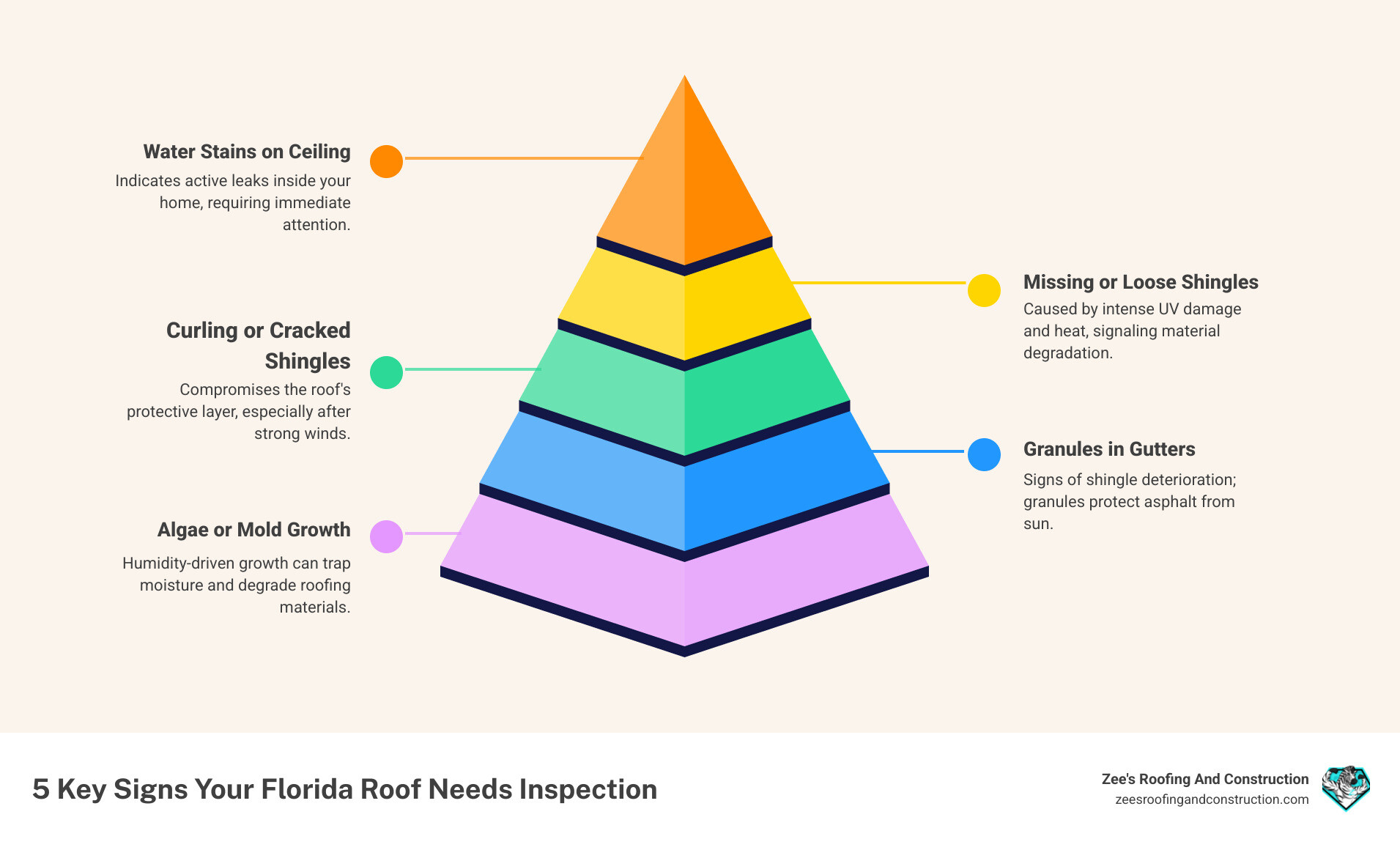
Missing or damaged shingles: This is the most obvious red flag, especially after a storm. Each missing shingle is a direct entry point for water, which can quickly saturate your roof decking and insulation, leading to costly interior damage.
Curling, cracking, or buckling shingles: This tells you the Florida sun has baked the life out of your shingles. They’ve lost their flexibility and are no longer sealed properly, making them highly susceptible to being torn off by wind and allowing water to seep underneath.
Granules collecting in your gutters: Those sand-like granules are your roof’s sunscreen. They protect the underlying asphalt from UV degradation. When you see large amounts in your gutters, it means your shingles are exposed and nearing the end of their lifespan.
Water stains on your ceiling or walls: Never ignore a water stain, no matter how small. By the time a stain is visible, the leak has likely been active for a while, potentially causing hidden mold growth and wood rot in your attic or wall cavities.
Algae or mold growth (dark streaks): The black streaks common on Florida roofs are a type of algae called Gloeocapsa magma. While initially a cosmetic issue, this algae feeds on the limestone filler in asphalt shingles, slowly breaking them down and retaining moisture, which shortens the roof’s life.
A sagging roof deck: If you notice a dip, bow, or sagging spot on your roofline, it’s a sign of a serious structural problem. This often indicates that trapped moisture has rotted the underlying wood decking, and it requires immediate attention from a professional to prevent further damage or even collapse.
The key is catching these problems early. As we always tell our customers, it’s much better to address issues before they become emergencies. For more insights on timing your roof replacement, read Why Replace Your Roof Now? 4 Reasons Not to Wait for a Leak.